A leading Ghanaian lawyer and gender advocate, Sheila Minkah-Premo Esq, has called for a renewed focus on transforming women’s economic empowerment from mere participation in economic activities into meaningful ownership of assets, wealth creation and economic justice.
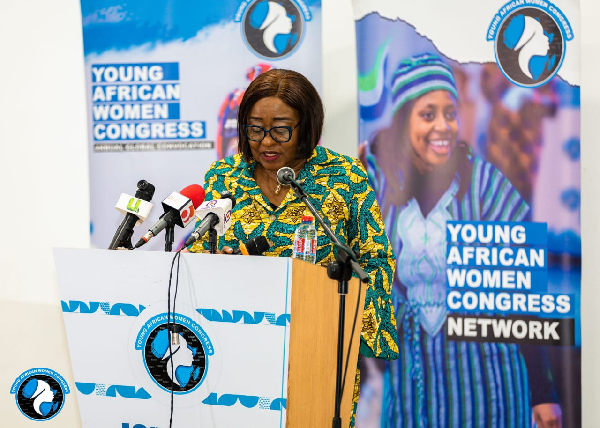
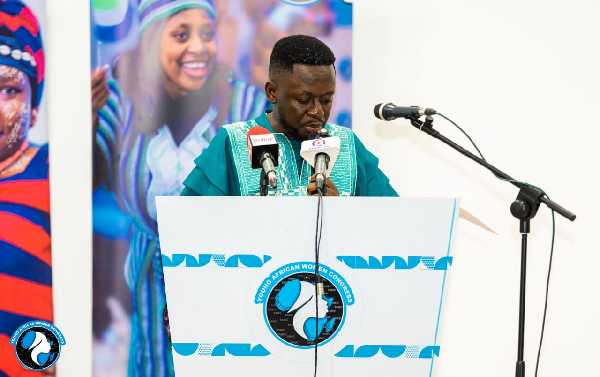
Speaking at the 10th Anniversary Public Lecture of the Young African Women Congress (YAWC) Network held at the Africa Trade House in Accra on July 31, 2026, Minkah-Premo, Managing Consultant of ALC Law Consult, said the next phase of Africa’s gender equality journey must focus on ensuring that women own productive resources, control wealth and benefit fully from economic growth.
Delivering a lecture on the theme “Beyond Empowerment: Ownership, Wealth and Economic Justice for African Women,” she said while significant progress had been made through education, financial inclusion, legal reforms and entrepreneurship initiatives, the continent must now confront the deeper challenge of women’s ownership of productive assets.
“A woman may be economically active and yet own no land. She may operate a successful business but lack the collateral required to expand it. She may spend a lifetime creating wealth and supporting others to create wealth without accumulating wealth of her own,” Minkah-Premo stated.
She explained that empowerment creates opportunities, but ownership gives women control over the benefits generated from those opportunities.
“Empowerment opens the door; ownership gives women the keys; and economic justice ensures that those keys can never again be taken away,” she said.
The lawyer noted that across Africa, women have historically played significant roles in agriculture, trade, entrepreneurship and community development, but their contributions have not always translated into ownership of land, businesses, investments and other wealth-generating assets.
Using Ghana as a case study, she highlighted the impact of constitutional provisions and legal reforms aimed at advancing women’s rights, including the Intestate Succession Act, 1985 (PNDCL 111), the Lands Act, 2020 (Act 1036), and the Affirmative Action (Gender Equity) Act, 2024 (Act 1121).
She however cautioned that legislation alone cannot guarantee economic equality unless laws are effectively implemented and women are equipped with the knowledge and resources to claim their rights.
“Laws do not implement themselves. People implement laws. Institutions implement laws. Citizens must insist that laws are respected,” she said.
Minkah-Premo further emphasised that one of the outstanding issues requiring urgent attention in Ghana is the enactment of comprehensive legislation on the property rights of spouses, as required under Article 22 of the 1992 Constitution.
She argued that women’s contributions within marriages, including caregiving, household management and support for family enterprises, must be recognised as part of wealth creation.
“A woman who contributes to building a home, growing a family business or supporting the economic success of her spouse has participated in creating wealth. A legal system committed to gender justice must therefore ensure that she has a fair claim to the value she helped create,” she stated.
The lawyer also called for a shift in conversations around women’s economic advancement, urging society to focus not only on income generation but also on asset ownership.
She said women must be encouraged to invest in land, businesses, shares, pensions, intellectual property and other assets capable of generating long-term financial security.
“Income alone does not necessarily create wealth. The question we should increasingly ask is: What do women own?” she challenged.
The public lecture formed part of activities marking the 10th anniversary of the Young African Women Congress Network, an organisation dedicated to leadership development, mentorship, advocacy and empowerment of young women across Africa and the diaspora.
In his welcome address, Founder and Executive Chairperson of YAWC Network, Daniel Osei Tuffuor, said the organisation’s decade-long journey had demonstrated the importance of investing in women’s leadership and economic potential.
He noted that over the past ten years, YAWC Network had expanded its presence to 12 countries across Africa and the diaspora, empowering more than 15,000 women through its Annual Global Convocation and impacting over 500,000 grassroots women through community projects.
He added that more than 30,000 young women and girls had benefited from initiatives in health, education and mentorship, while millions of people had been reached through advocacy campaigns aimed at influencing public policy and social change.
Osei Tuffuor said the anniversary theme reflected the organisation’s belief that the future of Africa depends on women moving beyond participation to becoming owners, investors and decision-makers.
“Empowerment alone is not enough. True transformation occurs when women have ownership of assets, enterprises, ideas, resources and the decisions that shape their economic futures,” he said.
He called for stronger partnerships between governments, businesses, development organisations, academia and civil society to remove structural barriers preventing women from achieving economic independence.
Watch as court takes over Cheddar’s prime property on Osu Oxford street
No contradictions in Finance Minister's Mid-Year Budget presentation - Majority Leader
Afenyo-Markin responds to Finance Minister's 2026 Mid Year Budget Review presentation
Ghana's recovery due to superior economic management - Ato Forson
Majority, Minority chant 'Free Wontumi', 'Bring Ken Back' after 2026 mid year budget review
General News of Sunday, 2 August 2026
Source: www.ghanaweb.com
YAWC Network calls for economic justice and women’s ownership of wealth
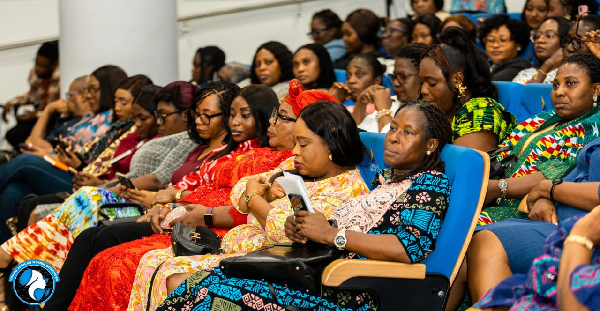
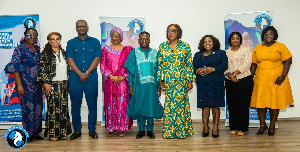 Some of the stakeholders at the event




Entertainment