The Minister for Lands and Natural Resources, Emmanuel Armah Kofi-Buah, has acknowledged the critical industrial role that the Volta Aluminium Company Limited (VALCO) could play in positioning Ghana's economy once the company is fully revived.
Consequently, he said the government would invite investors to support its efforts to restore VALCO to its former glory and unlock its potential to drive industrialisation within the Tema Industrial Enclave, while creating sustainable employment opportunities for Ghanaians.
Addressing hundreds of employees of the company last Thursday during a working visit to familiarise himself with its operations, the Minister explained that the administration of President John Dramani Mahama has no intention of selling the company, contrary to speculation.
"Nobody will sell VALCO under President Mahama," he assured.
Responding to concerns raised by employees that the company was on the government's radar for privatisation, the Minister described such claims as baseless and deliberately fabricated by a selfish few seeking to derail efforts to rebuild what he described as one of Ghana's key industrial assets.
"You accumulate debt and ask the taxpayer to pay for it. The ultimate responsibility to make sure that this plant works is not the employees. This organisation has a code of conduct and ethics," he cautioned.
He said those opposing the proposed revitalisation framework being pursued by the government should provide credible alternatives.
"If people genuinely have facts, they should bring them. It is our collective responsibility. Nobody has closed any deal here," he reiterated.
The Minister observed that the prolonged challenges facing VALCO had adversely affected several industries within the Tema Industrial Enclave that previously depended on the company for raw materials, leaving many of them struggling or on the verge of collapse.
"We want to make sure we turn this place around, and we are in this together. We have to work together," he appealed, drawing loud applause from the workers.
He reassured employees that the government's primary objective was to restore VALCO to profitability.
In line with this, he called on the workforce to support the proposed reforms to ensure their successful implementation for the benefit of all stakeholders.
Although the government has already outlined the strategic direction for the company, the Minister stressed that the process would be transparent and that all available options had been considered by Cabinet.
"We are open to any idea to turn around VALCO," he emphasised.
Emmanuel Armah Kofi-Buah underscored the negative impact of the company's inability to operate at full capacity.
"The effectiveness of the value chain is not happening because of the challenges facing this company—the refineries, the smelter and everything connected to it. It all starts with a profitable VALCO," the Minister remarked.
While reaffirming the government's commitment to finding an amicable solution to revive the company, he warned that it would not tolerate propaganda or misinformation from individuals seeking to frustrate the revitalisation process or undermine the government's efforts to transform VALCO into a productive and profitable state-owned enterprise capable of sustaining existing jobs, creating new employment opportunities and increasing productivity.
Currently, VALCO operates only 90 smelting cells, well below its installed capacity of 500 cells. Due to obsolete technology and ageing equipment, the company employs about 800 workers to operate the existing 90 cells. At full capacity, however, VALCO could directly employ at least 2,000 people while supporting about 5,000 direct and indirect jobs across the value chain.
The company is estimated to require no less than US$700 million in investment to finance its revival, ensure its long-term sustainability and unlock its full growth potential, in line with the government's vision for the company.
Business News of Sunday, 2 August 2026
Source: Daniel Kaku, Contributor
'We will revive VALCO and nobody can stop it' - Armah Kofi-Buah
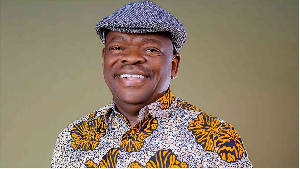
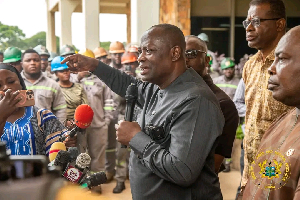 Lands Minister Emmanuel Armah Kofi-Buah engages VALCO workers