The two-day National Conference on Stemming the Growing Indiscipline in Schools in an Emerging World has ended with a call for coordinated national action to address indiscipline and promote safe, respectful and supportive learning environments in Ghanaian schools.
The conference, an initiative of the Education Minister, Haruna Iddrisu, brought together teachers, students, parents, traditional and religious leaders, security agencies, civil society organisations and development partners.
Participants agreed on the need for a balanced approach to discipline that combines clear rules, school authority, student rights, parental accountability, professional conduct and incentives for positive behaviour.
A key recommendation was the establishment of a National School Discipline Framework to guide schools at all levels.
The proposed framework is expected to define acceptable behaviour, offences, sanctions, institutional responsibilities, due process and referral procedures for issues including bullying, violence, theft, substance abuse, sexual misconduct and examination malpractice.
Participants also called for schools to be given sufficient authority to handle disciplinary matters, with heads and disciplinary committees empowered to investigate cases and apply appropriate sanctions promptly while protecting the dignity and rights of learners.
The conference further urged schools to promote values such as respect, truthfulness, hard work, responsibility, cooperation, integrity and peaceful conflict resolution.
Stakeholders also proposed a stronger partnership among schools, students and parents, with learners encouraged to understand their rights and responsibilities and parents taking a more active role in supporting school rules and disciplinary processes.
Student leaders, including prefects, were identified as important in promoting positive behaviour, with calls for them to receive training in peer mediation, restorative justice and identifying behavioural risks.
Participants also recommended continuous professional training for teachers and school leaders in behaviour management, counselling, child protection, mediation and professional ethics.
They called for functional guidance and counselling services, improved learner-support systems and the deployment of trained security personnel where necessary.
The conference stressed that discipline should not focus solely on punishment, urging schools to recognise and reward positive behaviour while providing support and incentives for teachers who take on additional disciplinary responsibilities.
Speaking at the closing ceremony, Deputy Education Minister Dr Clement Abas Apaak said the conference had moved beyond identifying the causes of indiscipline to developing practical solutions.
He said indiscipline was a shared national challenge that required collective action from government, schools, parents, communities and other stakeholders.
Dr Apaak urged participants to return to their communities as ambassadors of positive discipline, stressing that transforming the culture of discipline goes beyond government.
He reaffirmed the government’s commitment to safe schools, teacher dignity, positive discipline, learner wellbeing and evidence-based policymaking.
He said the education system must produce not only academic excellence but also learners with strong character.
Dr Apaak subsequently declared the National Conference on Stemming the Growing Indiscipline in Schools in an Emerging World officially closed.
General News of Friday, 31 July 2026
Source: www.ghanaweb.com
Ghana moves to strengthen school discipline with national framework
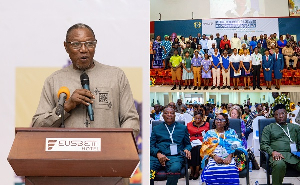 A key recommendation was the establishment of a National School Discipline Framework