Ghana is expected to receive a final disbursement of US$318 million as the Executive Board of the International Monetary Fund (IMF) meets on Monday, July 27, 2026, to consider the country’s sixth and final review under the Extended Credit Facility (ECF) programme.
The Board is also expected to approve Ghana’s request for a 36-month Policy Coordination Instrument (PCI) to guide economic reforms after the bailout programme ends.
If approved, the decision will formally conclude Ghana’s three-year ECF programme, which began in May 2023 and provided about US$3 billion to support macroeconomic stability, fiscal reforms and the country’s debt restructuring efforts.
Consumers could earn rewards for requesting VAT invoices - Finance Ministry
[Consumers could earn rewards for requesting VAT invoices - Finance Ministry](https://www.ghanaweb.com/GhanaHomePage/business/Consumers-could-earn-rewards-for-requesting-VAT-invoices-Finance-Ministry-2045025?utm_source=chatgpt.com)
Unlike the ECF, the PCI does not provide direct funding but is designed to strengthen policy implementation, boost investor confidence and support sustainable economic growth.
Ghana has since met the key quantitative and structural benchmarks required for the IMF Board’s approval, including reforms involving UMB Bank and Prudential Bank, as well as other policy actions agreed under the programme.
Earlier this year, IMF Mission Chief for Ghana, Dr Ruben Atoyan, said that once the Executive Board approves the review, “the final tranche of more than US$318 million would be released to the Bank of Ghana.”
He also noted at the conclusion of the IMF mission that Ghana had made “substantial stabilisation gains,” citing lower inflation, stronger international reserves, improved confidence in the cedi and progress in debt restructuring.
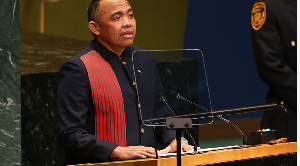
Finance Minister Dr Cassiel Ato Forson has said the government is ready to transition from the ECF to the PCI to safeguard the country’s recent economic gains. Presenting the 2026 Mid-Year Budget Review, he said the new programme would “anchor the country’s next phase of reforms, strengthen macroeconomic resilience and support broad-based growth.”
He also said the PCI will focus on six key areas: growth-friendly fiscal consolidation, debt sustainability, fiscal transparency and governance, stronger monetary and exchange rate policy frameworks, financial sector stability, and economic diversification.
He added that the programme would help preserve the gains made under the IMF-supported reforms while reinforcing investor confidence and policy credibility.
While acknowledging Ghana’s economic progress, the IMF has urged the government to sustain reforms, particularly in the energy sector.
The Fund says improving the efficiency of the Electricity Company of Ghana through greater private-sector participation will be critical to maintaining macroeconomic stability and ensuring long-term economic resilience.
ANAS/MA
Ghana's recovery due to superior economic management - Ato Forson
Business News of Monday, 27 July 2026
Source: www.ghanaweb.com
Ghana eyes final US$318 million IMF payout
 The International Monetary Fund (IMF)