Finance Minister Dr Cassiel Ato Forson has attributed Ghana’s recent economic crisis to a combination of fiscal decisions, governance challenges and a lack of transparency, which he said weakened the country’s economic position.
Presenting the 2026 Mid-Year Budget Review in Parliament on Thursday, July 23, 2026, Dr Forson said President John Dramani Mahama inherited an economy facing severe challenges when his administration assumed office in January 2025.
Dr Forson said Ghana’s economic downturn was caused by a combination of policy failures, which he outlined as:
1.Reckless spending
2.Excessive and binge borrowing
3.Lack of accountability
4. Failure of the previous government tell Ghanaians the true state of the economy
The Finance Minister said the consequences of these decisions were severe, affecting households, businesses and investors.
“The cedi depreciated at levels never seen before, eroding savings, businesses, business capital and purchasing power of millions of Ghanaians. Inflation exceeded 50 per cent, dramatically increasing the cost of living and placing basic necessities beyond the reach of many people,” he stated.
He added that disposable incomes declined sharply, while high interest rates made credit expensive for businesses in the private sector.
“Investor confidence collapsed. International reserves fell to extremely low levels. International credit rating agencies downgraded Ghana’s sovereign debt to levels never seen in our history,” he said.
Dr Forson further noted that Ghana lost access to international capital markets, while the debt restructuring programme imposed significant losses on domestic and external bondholders, financial institutions and individual investors.
“The previous government implemented a most painful debt restructuring programme that imposed a crude and painful haircut on domestic and external bondholders,” he said.
He explained that the economic difficulties also affected businesses, with some companies closing down or relocating, leading to job losses and worsening hardship among households.
Dr Forson said Ghana must draw lessons from the crisis and avoid returning to policies that undermine economic stability.
“We recount this event not to dwell on the past, but to remind ourselves of the heavy price of fiscal indiscipline, excessive borrowing, weak accountability and dishonest economic management. Ghana must never be brought this low again", he added.
The Finance Minister noted that the government’s focus was to implement reforms aimed at restoring confidence, protecting macroeconomic stability and preventing a repeat of similar economic difficulties.
Ghana meets debt target ahead of IMF schedule
Dr Ato Forson is presenting the 2026 Mid-Year Budget Review to Parliament, a statutory update that assesses economic performance, government revenue and expenditure, debt servicing and the fiscal outlook for the remainder of 2026.
JKB/VPO
Transitions serves over 2,000 direct and indirect clients weekly - MD
General News of Thursday, 23 July 2026
Source: www.ghanaweb.com
2026 Mid-Year Budget Review: Ato Forson outlines 4 reasons Ghana’s economy suffered crisis
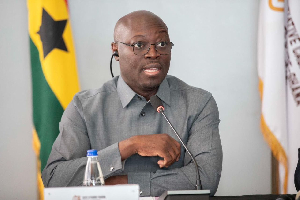 Dr Cassiel Ato Forson is the Minister of Finance