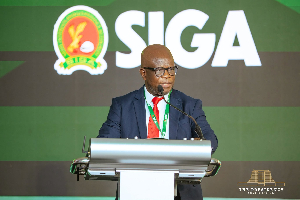
The Minister of Finance, Dr Cassiel Ato Forson, has announced that Ghana has achieved its statutory public debt target years ahead of schedule, citing lower inflation, improved fiscal performance, and stronger debt sustainability as evidence that the country’s economic recovery remains on track.
Presenting the 2026 Mid-Year Budget Review in Parliament on Thursday, July 23, 2026, Dr Forson said government’s fiscal reforms have produced better-than-expected macroeconomic outcomes, with inflation remaining in single digits, debt levels falling sharply, and the country’s debt risk improving significantly.
“Inflation declined from 23.8 percent in December 2024 to 5.4 percent at the end of 2025 and remained low at 5.7 percent in June 2026,” he said.
Online restaurant scams cost Ghanaians nearly GH¢300,000 in first half of 2026 - CSA
Dr Forson further said Ghana’s fiscal performance had exceeded programme targets, with the primary balance on a commitment basis recording a surplus of 2.5% of GDP in 2025 and a further surplus of 0.9% of GDP by June 2026.
“Fiscal performance has also exceeded expectations. By the end of June 2026, we had achieved a primary surplus of 0.9 percent of GDP on a commitment basis, and we are firmly on track to achieve our end-year target of 1.5 percent of GDP,” he said.
Prudent fiscal management, he noted, had driven a sharp reduction in Ghana’s public debt, with the debt-to-GDP ratio declining from 61.8% at the end of 2024 to 44.7% at the close of 2025, before edging slightly to 45.0% by June 2026.
“Ghana has achieved its statutory debt target of 45 percent of GDP years ahead of both the IMF programme timetable and the target date established under the Public Financial Management Act,” Dr Forson stated.
He added that the reduction in public debt had eased pressure on government finances, freeing up resources for national development priorities.
“Debt service as a share of domestic revenue declined sharply from 55.7 percent in 2022 to 28.8 percent in 2025, freeing up billions of cedis for schools, hospitals, roads, and other national priorities,” he noted.
Dr Forson also highlighted Ghana’s improved debt sustainability outlook, revealing that the country’s external and overall risk of debt distress has been upgraded by international financial institutions.
“For the first time since April 2014, Ghana’s external and overall risk of debt distress has improved from High to Moderate. The joint World Bank–IMF Debt Sustainability Analysis has moved Ghana from Unsustainable in May 2023 to Sustainable in 2025,” he told Parliament.
ANAS/SA
Business News of Thursday, 23 July 2026
Source: www.ghanaweb.com