For many people, the first instinct when they come across a snake is to kill it out of fear of being bitten.
Driven by the belief that it is either a kill-or-be-killed situation, many choose to strike first rather than risk becoming another victim of a snake bite.
However, Nigerian herpetologist Taiwo Okikiola sees things differently. Instead of killing snakes, she rescues and releases them into the wild while educating the public about the reptiles.
Snake Bite, House Emptied: Miracles Aboagye narrates flood ordeal
Popularly known as "Snake Girl", Taiwo has been using social media to challenge misconceptions about snakes and promote snake conservation despite facing years of criticism and being labelled a witch by some people.
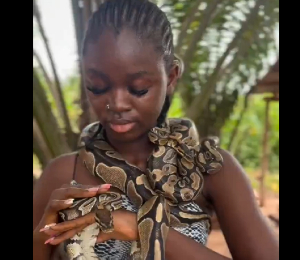
In a video shared by the BBC on July 20, 2026, Taiwo is seen calmly carrying snakes around her neck and handling them without fear as she explains her work.
According to her, she rescues snakes and returns them to their natural habitat instead of killing them.
"My name is Taiwo Okikiola. People like to call me Snake Girl. I'm a herpetologist. I catch snakes, rescue them, and release them back into the wild. That's what I do," she said.
Taiwo explained that many Africans have false beliefs about snakes, with some associating them with witchcraft, evil spirits, and supernatural forces.
She stressed that snakes usually enter homes and communities in search of food and shelter, not because they are linked to spiritual attacks.
"As Africans, the misconception we have about snakes is too much. People think that snakes are gods, some people think that they're evil, witchcraft. They say if you come across a snake in your environment, it means your village people have come for you, and it is not so. Snakes are just looking for food and shelter," she explained.
Her interest in snakes began during the COVID-19 pandemic after she took an online course on LinkedIn. Since then, she has used social media to educate the public on snake bites and the importance of conserving the reptiles.
According to Taiwo, her decision to share snake-related content online attracted heavy criticism, including from members of her own family.
She recalled that her mother believed she was possessed, while some neighbours branded her a witch and avoided visiting her home.
"When I started online awareness, I got a lot of negative reactions, but my greatest challenge was facing my mother. My mother believed that I was possessed and that something was wrong with me. My neighbours thought that I was a witch. They don't come to my house, but now people show interest; they always ask for a new post," she recounted.
Despite nearly giving up because of the negative reactions, Taiwo said she remained focused on her mission to reduce deaths caused by snake bites in Nigeria.
She revealed that one of her long-term goals is to support the production of anti-venom and improve access to the life-saving treatment.
TWI NEWS
"At first, I nearly gave up. I thought people did not like my content, but I pushed because I have a purpose. Nigeria has grown too big for people to keep dying from snake bites. I want to venture into the production of anti-venom," she stated.
Snake causes power outage in the Ashanti Region
She also called on the government and stakeholders to make anti-venom more accessible and affordable across the country.
"In a country like Nigeria, anti-venom should be available in every primary care health centre, close-by pharmacies, and also government hospitals, not just private hospitals. So we need to work together to make the anti-venoms affordable," she added.
More than 2,000 people die from snake bites in Nigeria every year, as many victims struggle to access anti-venom due to limited availability and high costs.
A snake sighting almost anywhere can trigger panic, often fuelled by fear, myths and spiritual beliefs. But these reptiles are so misunderstood. Despite being called "a witch", herpetologist Taiwo Okikiola continues to use social media to raise awareness about snake conservation. pic.twitter.com/6brBlq9gMi
— BBC News Africa (@BBCAfrica) July 20, 2026
MAG/VPO
Understanding Maternal Mental Health