A historic photo of the Asante Royal Palace in Kumasi offers a rare window into one of Africa's most remarkable royal residences before it was destroyed during the Third Anglo-Asante War in 1874.
The illustration depicts the palace as it stood in February 1874 during the reign of Otumfoɔ Kofi Karikari, the 11th Asantehene. At the time, the palace served as the political, administrative and ceremonial headquarters of the powerful Asante Kingdom.
Far more than a royal residence, the palace symbolised the authority, wealth and sophistication of the Asante state. European travellers who visited Kumasi in the nineteenth century frequently praised the complex for its impressive scale, intricate craftsmanship and unique architectural design.
The palace combined traditional Asante architecture, characterised by beautifully decorated thatched buildings adorned with symbolic motifs, with an imposing multi-storey structure that reflected the kingdom's prosperity and willingness to incorporate new architectural ideas.
In a post by Siliconson on social media, sighted by GhanaWeb, the royal facility showed a blend of indigenous and innovative design made it one of the most admired royal complexes on the African continent.
However, the grandeur of the palace was short-lived. In February 1874, British forces occupied Kumasi during the Third Anglo-Asante War. Following the capture of the city, the royal palace was systematically looted and set ablaze.
The invasion led to the loss of countless royal regalia, sacred objects, priceless artworks and state treasures, many of which were either destroyed or taken to Europe.
Historians regard the destruction as one of the greatest cultural tragedies in the history of Asanteman.
Today, the lithograph remains one of the most significant surviving visual records of the original Asante Royal Palace before its destruction.
It preserves the memory of a royal complex that stood as a testament to the ingenuity, artistic excellence and political power of the Asante Kingdom in the nineteenth century.
While the present-day Manhyia Palace, built in 1925, serves as the official residence of the Asantehene, this rare image provides a glimpse into an earlier era, reminding Ghanaians and the world of the architectural splendour and cultural heritage that once defined the heart of the Asante Empire.
See post below
General News of Saturday, 18 July 2026
Source: www.ghanaweb.com
Manhyia Palace in the 1870s: See rare photo of the Asante Royal Palace before its destruction
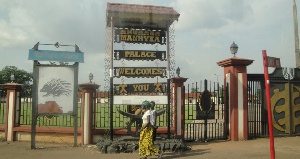 File photo of Manhyia Palace




Entertainment