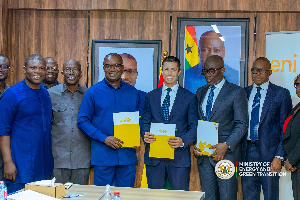
Ghana’s decision to make an early US$700 million Eurobond payment at the beginning of July 2026 – making the payment well before the January 2027 maturity date stipulated under the restructured debt agreement – has been widely interpreted by international investors as another milestone in the country’s return to financial credibility following its sovereign debt restructuring.
Beyond meeting a contractual obligation, the payment has strengthened confidence in Ghana’s commitment to honouring the terms of its restructured external debt, improved investor sentiment towards the country’s outstanding Eurobonds, and reinforced expectations that Ghana is steadily regaining access to international capital markets.
Impact on Ghana’s traded Eurobonds
The impact on Ghana’s Eurobonds trading in secondary markets has been immediate and largely positive. International portfolio investors generally interpret timely debt service as a reduction in sovereign credit risk. Consequently, demand for Ghana’s outstanding restructured Eurobonds has strengthened, particularly among emerging market bond funds seeking higher yields from countries whose economic fundamentals are improving.
As demand has increased, prices of Ghana’s outstanding Eurobonds have generally firmed across several maturities. Rising bond prices naturally translate into falling yields, meaning investors now require a smaller risk premium than they did immediately following Ghana’s debt restructuring.
While the payment was designed to boost investor trust, exact price changes or yield shifts for specific international bond maturities following this exact announcement have not yet been compiled in central trading metrics however.
But already, international securities traders have reported improved liquidity in Ghana’s Eurobond market. Higher investor confidence typically encourages more active buying and selling rather than purely speculative trading.
Asset managers who had remained cautious after Ghana’s default are rebuilding positions, while some investors who purchased the bonds at distressed prices following the restructuring have begun taking profits as valuations recover.
Market analysts note that while Ghana’s bonds still trade at yields significantly above those of investment-grade sovereign issuers, the risk premium has narrowed steadily during 2026 as confidence in the country’s economic recovery has strengthened.
But Ghana’s Eurobonds continue to trade at yields significantly above investment-grade issuances, reflecting the residual sovereign risk of an economy that completed its debt restructuring in late 2024. Investment-grade debt yields roughly 4 to 6 percent. Because Ghana’s yields sit near the double-digit mark, the premium (or spread) remains elevated by about 400 to 600 basis points over safe-haven assets, with yields in the 9.5 to 10.5 percent range.
Ghana’s exact risk premium compression numbers for 2026 are not currently compiled into public financial reports, but the market has seen massive shifts compared to the historic highs reached at the peak of the now receding economic crisis. During the height of Ghana’s economic crisis between late 2022 and 2024, the country was effectively locked out of international capital markets.
Its bonds traded at highly distressed levels—averaging cash prices around US$49 per US$100 face value—with yields surging deep into distressed territory at well over 20 percent to as much as 30 percent.
But following the completion of the Eurobond Debt Exchange Programme in late 2024 and sequential massive debt payments—including US$1.4 billion between early 2026 and July 2026 alone—the extreme “default premium” has been completely erased. The spread has compressed by thousands of basis points from its absolute peak, transitioning Ghana from a “distressed/default” yield profile to a standard “high-yield B-rated frontier” profile.
Why the premium still remains above investment grade
Despite clearing over US$2.1 billion in Eurobond payments since January 2025, international markets still price in structural caution due to several key factors.
Ghana remains locked out of issuing new Eurobonds, with authorities confirming they are not in a hurry to return to international capital markets. Total scheduled Eurobond repayments for 2026 exceed US$1.4 billion, which continuously tests the Bank of Ghana’s foreign exchange reserves.
The country operates under close macroeconomic monitoring, relying heavily on IMF programme milestones to anchor investor confidence; even though technically, Ghana exited the programme in May, it has agreed to a Policy Guidance Instrument through which the Fund still provides unfunded guidance for policy credibility purposes.
Added to all this Ghana’s sovereign credit profile is deeply tied to volatile gold and oil exports rather than a diversified revenue base.
The ability to make such a sizeable payment ahead of schedule reflects the dramatic improvement in Ghana’s macroeconomic position over the past eighteen months. Several factors have contributed to the stronger liquidity position.
First has been the remarkable appreciation of the cedi during 2026, which has significantly reduced the domestic currency cost of servicing external obligations. Secondly, government revenue has been boosted by stronger-than-expected gold exports, robust cocoa receipts despite production challenges, and continued growth in oil revenues.
Equally important has been continued fiscal consolidation under the country’s programme with the International Monetary Fund, which has improved expenditure control and generated larger primary fiscal surpluses than originally projected.
Analysts across the emerging markets investment community argue that the payment sends an important signal beyond its monetary value. Sovereign debt markets place considerable emphasis on consistency and credibility.
Countries emerging from debt restructuring must convince investors not merely that they can service today’s obligations but that they have established sustainable fiscal and economic policies capable of supporting future repayments. Ghana’s decision to pay early rather than merely on time therefore carries symbolic significance that exceeds the US$700 million involved.
The payment is therefore likely to strengthen Ghana’s relationship with the international portfolio investment community. The sovereign default severely damaged investor confidence, leading many global emerging market funds either to sell Ghanaian securities or to classify the country as un-investable until restructuring had been completed. Since then, restoring trust has become as important as restoring macroeconomic stability.
Portfolio managers generally acknowledge that confidence takes years to rebuild after a sovereign default. However, they also recognize consistent evidence of improved policy management.
Ghana’s stronger foreign exchange reserves, fallen inflation, exchange rate stability, improved fiscal discipline and successful implementation of IMF-supported reforms have already encouraged many investors to reassess the country’s prospects. The early Eurobond payment adds another tangible demonstration that the government is willing and able to honour its financial commitments.
For Ghana, the longer-term significance extends beyond current bond prices. A sustained improvement in secondary market valuations ultimately reduces the cost at which the country may eventually return to issuing new international bonds.
Although government officials continue to emphasize that Ghana has no immediate plans to re-enter the international capital markets, stronger trading performance today lays the foundation for cheaper future borrowing when market access is eventually restored.
Business News of Sunday, 12 July 2026
Source: businesspostonline.com
Ghana's early Eurobond repayment stimulates secondary market trading
 Dr Cassiel Ato Forson is the Minister of Finance