With the days counting down to the next meeting of the Bank of Ghana’s (BoG) Monetary Policy Committee, scheduled for Monday July 20 to Wednesday July 22, banks are positioning themselves for three possible MPC outcomes as the situation has been made even more complicated by the resumption of hostilities between the United States and Iran in the Persian Gulf this week, which has already generated another upward surge in global energy prices
The first—and widely regarded as the most likely by bank chieftains and treasurers—is that the MPC leaves the policy rate unchanged at 14.0 percent as it did at the last meeting in May.
In anticipation of this outcome, most banks are maintaining existing lending rates while becoming increasingly selective regarding credit approvals.
Relationship Managers report greater emphasis on lending to sectors with predictable cash flows, including telecommunications, mining, export agriculture and established manufacturing firms, while remaining cautious toward highly leveraged commercial real estate, trading businesses dependent on imported goods and enterprises particularly vulnerable to rising fuel and freight costs.
Deposit mobilization has simultaneously become more competitive. Banks are offering improved fixed-deposit packages, promotional savings products and corporate cash management services to lock in relatively inexpensive funding ahead of any future increase in market interest rates.
Rather than engaging in aggressive loan growth, institutions are seeking to strengthen liquidity and improve funding stability, recognizing that uncertainty surrounding inflation and global energy markets could quickly alter domestic monetary conditions.
The second possibility is a modest increase in the Monetary Policy Rate, perhaps by 100 basis points, should the MPC conclude that inflation expectations risk becoming unanchored. The renewed military confrontations in the Persian Gulf have revived concerns over disruptions to oil supplies and shipping routes through the Strait of Hormuz.
Rising crude oil prices would feed directly into Ghana’s petroleum import bill, transport costs and eventually consumer prices, potentially requiring a pre-emptive monetary response despite relatively stable domestic demand.
Commercial banks have therefore begun incorporating this possibility into their pricing models. Treasury departments are shortening the duration of investment portfolios, while credit committees are stress-testing borrowers against scenarios involving higher borrowing costs.
Some institutions are quietly widening lending margins on new commercial facilities or including clauses permitting re-pricing should benchmark rates increase during the life of the loan.
A third, though considerably less likely, option would be for the MPC to reduce the policy rate to encourage private sector credit. Few economists currently regard this as realistic. While inflation remains comparatively low by historical standards, renewed geopolitical uncertainty significantly increases upside inflation risks. Reducing interest rates at this stage could weaken market confidence in the central bank’s inflation-fighting credentials and potentially place renewed pressure on the exchange rate if foreign portfolio investors reassess Ghana’s interest rate differential.
Consequently, financial market analysts broadly expect banks to preserve conservative lending policies over the coming months regardless of the MPC’s precise decision.
Corporate borrowers are being encouraged to secure medium-term financing sooner rather than later, while households seeking mortgages or personal loans may face stricter affordability assessments even if headline lending rates remain largely unchanged.
Money market participants also expect banks to continue favouring government securities over aggressive private sector lending where risk-adjusted returns remain attractive.
Although Treasury bill yields have fallen substantially over the past year, government securities continue to provide liquidity, regulatory capital advantages and relatively low credit risk during periods of global uncertainty.
The Bank of Ghana enters the July MPC meeting with competing objectives. On one hand, inflation remains below the floor of the central bank’s medium-term target band of 8 percent ±2 percent, although the June increase from 3.7 percent in May to 5.3 percent represents the third consecutive monthly rise. The central bank had previously warned that geopolitical tensions in the Middle East could interrupt the country’s disinflation process through higher imported fuel, transport and production costs.
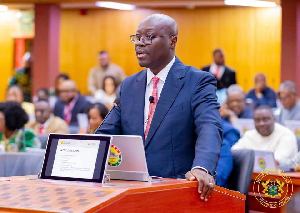
During the May MPC meeting, Governor Dr. Johnson Pandit Asiama who is also the Chairman of the Committee emphasized that monetary policy would remain sufficiently tight to prevent temporary imported inflation from becoming entrenched in domestic prices.
On the other hand, Ghana’s macroeconomic fundamentals remain considerably stronger than a year ago.
The cedi has been relatively stable, gross international reserves have improved, fiscal consolidation continues under the IMF-endorsed but domestically designed programme, while banking sector liquidity and capitalization remain healthy.
These improvements argue against an immediate policy tightening, particularly since underlying monthly inflation remains subdued despite the annual increase. Investment analysts at IC Research therefore expect the MPC to maintain the policy rate at 14 percent, arguing that the June inflation spike was driven largely by base effects rather than broad-based demand pressures.
Ultimately, the July MPC meeting is likely to reinforce prudence rather than trigger dramatic changes in banking behaviour. The central bank’s overriding challenge is distinguishing between temporary imported inflation arising from geopolitical events and more persistent domestic price pressures.
Unless evidence emerges that higher fuel and shipping costs are feeding into sustained inflation expectations, maintaining the policy rate at 14 percent while signaling continued vigilance appears the most balanced course.
For banks, that would validate their current strategy: cautious lending, aggressive deposit mobilization, disciplined liquidity management and careful pricing of credit until greater certainty returns to both global energy markets and Ghana’s inflation outlook.
Business News of Sunday, 12 July 2026
Source: businesspostonline.com
Banks repositioning ahead of uncertain BoG key interest rate decision
 Dr Johnson Pandit Asiama is Bank of Ghana Governor