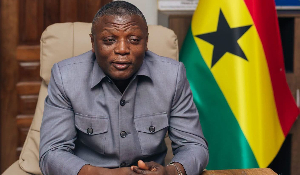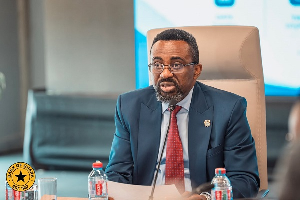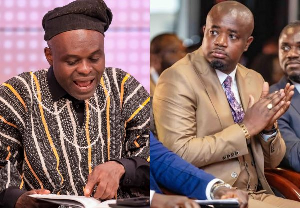
Chief Executive Officer of the National Petroleum Authority (NPA), Godwin Edudzi Tameklo, has dismissed claims that Ghana’s decision to extradite social media influencer Frederick Kumi, popularly known as Abu Trica, to the United States was linked to any quid pro quo arrangement.
Earlier, private legal practitioner Martin Kpebu questioned the speed at which Ghana extradited Abu Trica to the US to face charges, suggesting that the urgency could indicate that Ghana needed something critical from the United States.
However, reacting to the claims during a panel discussion on TV3 Ghana on July 11, 2026, which he participated in, Tameklo dismissed speculation of any agreement involving Ghana and the US.
How the New York Times reported on Abu Trica's extradition to the US
“I am not aware of any quid pro quo arrangement with the government of the United States of America by way of loans or any other thing. This is the government’s way of sending a message of zero tolerance for cyber and other related issues,” Edudzi Tameklo said.
Tameklo further supported his argument by referencing Ghana’s constitutional history, recalling how former Interior Minister Krobo Edusei clashed with the courts over deportation matters in the 1950s.
“Thankfully, we have legislation in Ghana that governs some of these undertakings. I recall vividly that in those times, the courts would stop deportations, and immediately Krobo Edusei would go to Parliament and get it to pass ad hominem legislation. The courts were very angry, and Edusei was convicted of contempt,” he explained.
He said those experiences influenced the development of Ghana’s 1979 and 1992 Constitutions, which place limits on Parliament’s ability to pass laws aimed at overriding court decisions.
“So today, if a matter is in court and the legislature or executive are not happy, they cannot quickly pass a law to override a judicial pronouncement. It is based on that checkered history that the 1992 Constitution was designed to serve as a check,” Tameklo said.
Addressing the Abu Trica case, he argued that the government’s decision could be motivated by a desire to protect Ghana’s international image.
“I strongly believe that in the Abu Trica matter, government may have taken the position that it wants to send a forceful message: Ghana will not provide a shield for persons found to have engaged in such conduct. Perhaps there is a greater good in protecting the image of the Republic as not being a safe haven for such misdeeds,” he added.
While acknowledging concerns that the process may appear to have moved quickly, Tameklo suggested that the government was balancing the need for urgency with constitutional safeguards.
“Regrettable as it may appear, the government may be seeking a balancing act, weighing whether the justification for such a speedy extradition is worth it,” he said.
Watch the video below:
Extradition of Abu Trica: I am not aware of any quid pro quo arrangement with the government of the United States of America by way of loans or any other thing. This is the government's way of sending a message of zero tolerance for cyber and other related issues.
— #TV3GH (@tv3_ghana) July 11, 2026
- Godwin… pic.twitter.com/pi3arwsTVk
VKB/MA