A private citizen, Dr Yaw Twerefour (petitioner) has invoked the original jurisdiction of the Supreme Court to challenge the long-standing practice of allocating portions of the District Assemblies Common Fund (DACF) to Members of Parliament (MPs), arguing that the arrangement is unconstitutional and undermines Ghana's decentralisation framework.
The suit, filed under Articles 2(1) and 130 of the 1992 Constitution, seeks a declaration that the DACF is exclusively reserved for District Assemblies and that any allocation or disbursement of the fund to MPs is unlawful.
What is the DACF?
The District Assemblies Common Fund was established under Article 252 of the Constitution to support local development through District Assemblies. The Constitution requires that not less than five percent of Ghana's total revenue be paid annually into the fund for distribution among Metropolitan, Municipal and District Assemblies.
According to the petitioner, the constitutional scheme clearly designates District Assemblies as the beneficiaries and managers of the fund, with responsibility for planning, budgeting and implementing development projects at the local level.
Why is the practice being challenged?
The petitioner contends that a practice dating back to 1997 has allowed portions of the DACF to be earmarked for MPs under various descriptions, including "MPs Common Fund," "Constituency Labour Projects," and "Constituency Labour Monitoring and Evaluation."
The suit argues that these allocations have no constitutional or statutory basis and were introduced through administrative and political arrangements rather than legislation.
Supreme Court petitioned over payment of Common Fund to MPs
According to the petitioner, Article 252 does not recognise Members of Parliament as beneficiaries, administrators or custodians of the DACF. The action therefore asks the Supreme Court to determine whether MPs can lawfully receive any portion of the fund.
Concerns over payments into personal accounts
A key issue raised in the suit is the alleged payment of DACF monies into the personal bank accounts of some Members of Parliament.
The petitioner argues that such payments weaken accountability and expose public funds to potential misuse because the monies leave the institutional control of District Assemblies and become difficult to trace within established public financial management systems.
The suit further contends that the practice undermines the audit mandate of the Auditor-General and may violate Article 187 of the Constitution as well as provisions of the Public Financial Management Act, 2016 (Act 921).
The constitutional argument
The petitioner maintains that Ghana's decentralisation framework places local development responsibilities squarely in the hands of District Assemblies, which are recognised under the Constitution as the highest political and administrative authorities at the local level.
While MPs serve as ex-officio members of District Assemblies, the suit argues that this status does not give them authority to administer, supervise or receive DACF monies.
The petitioner further rejects the justification that MPs require the funds for constituency monitoring and evaluation activities, arguing that such functions can be carried out within existing District Assembly structures without transferring public funds to individual legislators.
According to the filing, permitting MPs to receive DACF allocations effectively creates a parallel financial system outside the constitutional structures established for local governance and accountability.
Reliefs sought
The petitioner is asking the Supreme Court to interpret Article 252 as reserving the DACF exclusively for District Assemblies and to declare any allocation or disbursement of the fund to MPs unconstitutional.
The suit also seeks consequential orders to halt future payments of DACF monies to Members of Parliament under any designation and to ensure compliance with constitutional and statutory requirements governing the management of public funds.
The Attorney-General, the Administrator of the District Assemblies Common Fund, the Minister for Local Government, Chieftaincy and Religious Affairs, and the Minister for Finance have been named as defendants in the case.
The Supreme Court is expected to determine whether the long-standing practice of allocating portions of the DACF to MPs is consistent with Ghana's Constitution and decentralisation framework.
VPO
General News of Thursday, 11 June 2026
Source: www.ghanaweb.com
Payments into Personal Accounts: Inside the legal battle over MPs’ Common Fund
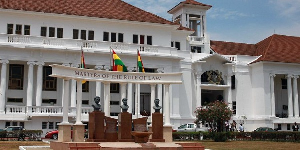 Supreme Court of Ghana File photo.