Ghana plans to process domestic crude at the state-owned Tema Oil Refinery in order to reduce costs and gain more control over fuel supply.
The West African nation will sell its share of crude output from offshore fields — and ask producers including Tullow Oil Plc and Kosmos Energy Ltd. to make production available to the 45,000 barrel-a-day refinery, according to Edmond Kombat, its managing director.
Sourcing as much as 33,000 barrels a day of local oil would help reduce the cost of freight and insurance, and translate into cheaper fuels in the country, he said.
“The government of President John Mahama has directed that from July we start receiving Ghana’s share of crude from all three oil fields Jubilee, TEN and Sankofa,” he said in an interview at his office in Tema, about 35 kilometers west of Accra, the capital.
“This will reduce the foreign exchange demand for finished petroleum products,” he added.
The Iran war shock has caused the oil market to surge and crimped fuel supply from the Persian Gulf, leaving African nations to look for alternative suppliers and try to keep pump prices under control. While Ghana relies less on Middle East imports than many other states on the continent, it has been susceptible to higher prices.
Tema is processing about 28,000 barrels a day of oil, but is expected to ramp up to full capacity later this month, according to Kombat.
The Iran war has also inspired governments to either revisit or draw up plans to refine locally.
Cheap imports threaten local poultry industry – Stakeholders
Africa’s richest person, Aliko Dangote, has announced building a refinery in East Africa that’s similar to the one he completed in Nigeria. Zambia expects to build a small plant.
Ghana’s domestic production is far from meeting fuel demand of about 135,000 barrels a day and there are other opportunities to supply West Africa, according to Kombat.
Feasibility studies have commenced for a second national refinery to add 100,000 barrel-a-day capacity and increase storage systems to serve the region, he said.
Business News of Thursday, 11 June 2026
Source: bloomberg.com
Ghana plans to use local crude at Tema Refinery to lower costs
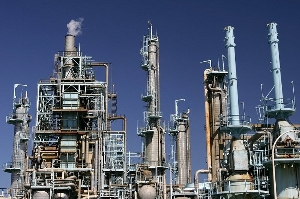 The Tema Oil Refinery is back in operation