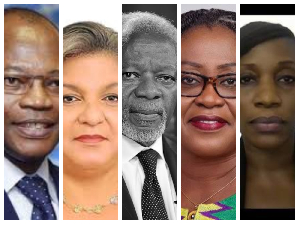
When discussing the machinery of global governance, conflict resolution, and international humanitarian law, Ghana’s footprint at the United Nations stands out as disproportionately large.
From the architectural reforms of the late 1990s to modern-day crisis management in the world’s most dangerous conflict zones, Ghanaian diplomats have consistently answered the call to lead.
The legacy of global service anchored by the historic tenure of the late and former Secretary-General Kofi Annan, continues to flourish today through high-ranking officials like Edem Wosornu, reinforcing Ghana’s reputation as a cradle of world-class diplomatic talent.
Here is a look at the iconic Ghanaian figures who have shaped, steered, and defined the mission of the United Nations.
1. Kofi Annan: The Master Diplomat and Reformer
No discussion of international diplomacy is complete without the late Kofi Annan. Rising through the ranks of the UN bureaucracy, Annan served as the seventh Secretary-General of the United Nations from January 1997 to December 2006.
Annan fundamentally revitalized the UN. He was the chief architect of the Millennium Development Goals (MDGs) which laid the structural foundation for today's Sustainable Development Goals (SDGs)—and launched the UN Global Compact to bind corporate entities to ethical social practices.
In 2001, Annan and the United Nations were jointly awarded the Nobel Peace Prize "for their work for a better organized and more peaceful world." His doctrine of the "Responsibility to Protect" (R2P) permanently altered how the international community views state sovereignty in the face of mass atrocities.
2. Edem Wosornu: The Voice for Global Humanitarian Crises
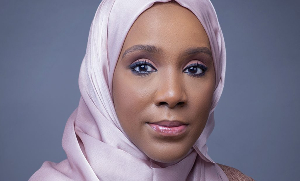
Carrying the torch of Ghanaian excellence in the modern era is Edem Wosornu, the Director of Operations and Advocacy for the United Nations Office for the Coordination of Humanitarian Affairs (OCHA).
With over two decades of experience within the UN system—including critical deployments in Sudan, South Sudan, and headquarter policy desks—Wosornu has become one of the most visible and influential African women in global crisis management.
Whether briefing the UN Security Council on the brink of famine in war-torn regions or coordinating multi-billion-dollar aid packages for disaster zones, Wosornu’s strategic leadership embodies the pragmatic, empathetic, and urgent diplomacy required in an increasingly fractured world.
Meet Edem Wosornu: The Ghanaian woman appointed UN Assistant High Commissioner
3. Martha Ama Pobee: Navigating African Peace and Security
Another titan in the UN halls is Martha Ama Pobee, who serves as the Assistant Secretary-General for Africa in the Departments of Political and Peacebuilding Affairs and Peace Operations (DPPA-DPO).
Before ascending to this crucial Secretariat role, Pobee made history as Ghana’s first female Permanent Representative to the United Nations in 2015. Today, she is at the absolute center of diplomatic efforts to navigate complex transitions, electoral disputes, and peacekeeping deployments across the African continent.
4. Dr Mohamed Ibn Chambas: The West African Pacifier
A consummate statesman, Dr Mohamed Ibn Chambas has long been the UN's premier trouble-shooter in West Africa. Serving as the Special Representative of the Secretary-General and Head of the UN Office for West Africa and the Sahel (UNOWAS), Chambas spearheaded mediation efforts that prevented civil collapse during high-stakes elections and constitutional crises across the ECOWAS sub-region.
5. Hannah Serwaa Tetteh
Hanna Tetteh has held several senior UN appointments. In 2018, she was appointed Director-General of the United Nations Office at Nairobi (UNON), one of the UN's four major headquarters worldwide.
She later became Special Representative of the Secretary-General to the African Union and subsequently Special Envoy for the Horn of Africa.
She currently serves as the UN Secretary-General's Special Representative for Libya and Head of the United Nations Support Mission in Libya (UNSMIL).
Why Ghana Continues to Answer the Call
Ghana's outsized influence at the UN is not accidental. As one of the earliest African nations to gain independence, Ghana built its foreign policy on the pillars of pan-Africanism, non-alignment, and international law.
Furthermore, the country remains one of the world's top contributors of military and police personnel to UN Peacekeeping operations, with Ghanaian blue helmets defending civilian populations everywhere from Lebanon to the Democratic Republic of Congo.
From the moral clarity of Kofi Annan to the operational urgency of Edem Wosornu, Ghanaian diplomats continue to prove that when the world faces its darkest hours, Accra's finest are always ready to lead the global response.
MRA/VPO
Meanwhile, watch as Joffery Nortey shares his career journey from comedy to content creation
General News of Wednesday, 10 June 2026
Source: www.ghanaweb.com
Dr Ibn Chambas to Edem Wosornu: Meet the elite Ghanaians who were appointed to top UN roles
 Ghanaian diplomats have consistently answered the call to lead at UN