South Africa, 2010. A moment that still refuses to fade.
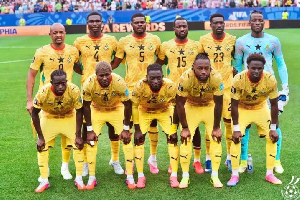
Ghana stood one kick away from becoming the first African nation to reach a World Cup semi-final.
The penalty was there. The history was there. The silence before it was heavier than the stadium itself.
Asamoah Gyan stepped forward.
The strike, the crossbar, the rebound into eternity.
And just like that, Ghana’s closest brush with football immortality slipped away in a single heartbeat.
That Black Stars team became legend not because they reached the summit, but because they almost did.
Why Derrick Luckassen and Brian Brobbey have different last names despite being brothers
Anthony Annan’s dominance in midfield, Stephen Appiah’s leadership, Kevin-Prince Boateng’s unpredictability, André Ayew’s youthful hunger, and Gyan’s burdened brilliance all formed a generation that carried the weight of a continent’s hope.
But what followed turned that moment into something even heavier.
Brazil 2014 was supposed to be redemption. Instead, it became chaos, a tournament overshadowed by internal issues, and a painful exit that felt like a collapse rather than a campaign.
Then came 2018. No World Cup at all. For the first time in years, Ghana wasn’t on football’s biggest stage. The noise stopped.
The Black Stars were not absent in performance alone, they were absent in identity.
And in 2022, there was hope again. A new squad, a new energy, a dramatic return. But the story still did not find closure.
The brilliance of moments, from players like Mohammed Kudus, Thomas Partey, Lawrence Ati-Zigi and Jordan Ayew could not hide the fragility of consistency.
Ghana left early once more, still searching for something it had not fully defined since 2010.
This is where the comparison with the present generation becomes more than nostalgia, it becomes pressure.
The new Black Stars are not stepping into a clean history. They are stepping into a decade of unfinished stories.
And this time, it is not just the record that weighs on them, it is the mood of the nation.
Because of years of failure, near-misses and inconsistency, belief among fans has slowly faded.
The excitement that once surrounded the Black Stars has been replaced with doubt, frustration, and silence. What was once hope has become hesitation.
Ghana failed to qualify for the 2025 AFCON. Before that, there were two group stage exits at the 2021 and 2023 AFCON, a warning sign that the issues run deeper than tournament moments.
In the build-up to this World Cup cycle, form has also been unstable, with a winless run stretching across six games, a run that cost the job of Otto Addo, the man behind the team’s World Cup qualifications in 2022 and 2026.
However, there was a bit of optimism in the one all draw coming against Wales in a pre-World Cup friendly under new head coach Carlos Queiroz.
The squad itself reflects both continuity and change.
Many familiar names remain from 2022; Ati-Zigi, Gideon Mensah, Fatawu Issahaku, Iñaki Williams, Semenyo, Kamaldeen Sulemana, Baba Rahman, Thomas Partey, Jordan Ayew and Alidu Seidu, players who have already lived through disappointment and expectation.
But key pillars are missing this time.
Mohammed Salisu and Alexander Djiku, who anchored parts of the 2022 defence, are absent through injury.
André Ayew, the captain of that era, is no longer in the squad. And Mohammed Kudus, the one player capable of shifting momentum in a single moment, is also missing, leaving a creative void that deepens the uncertainty.
In their place comes a new layer of urgency and opportunity.
Brandon Thomas-Asante, Prince Adu and Christopher Bonsu Baah bring fresh attacking energy.
Marvin Senaya and Jonas Adjetey step into defence as World Cup debutants.
Kojo Oppong Peprah, Kwasi Sibo, Caleb Yirenkyi and Augustine Boakye also represent a new core, with Boakye carrying the expectation of providing the missing spark.
This is a team caught between eras, but not fully 2010’s legacy, not yet a settled modern force.
The 2010 generation gave Ghana belief.
The years that followed tested it, stretched it, and nearly broke it.
Now this generation carries something heavier than belief.
They carry expectation shaped by failure, absence, and repeated rebuilding.
And perhaps most importantly, they carry a fanbase that no longer believes easily, a nation waiting not for promises, but for proof.
Because as another World Cup approaches, Ghana is no longer just asking what this team can become.
It is asking whether this generation can finally convince a watching country that they still belong on football’s biggest stage.
FKA/JE
Sports News of Monday, 8 June 2026
Source: www.ghanaweb.com
Black Stars 2010 vs the New Generation: A Story still waiting for closure
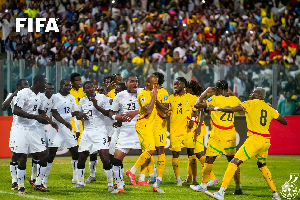 Players of the 2010 World Cup and the current generation