The Deputy Chief Executive Officer of the Ghana Cocoa Board (COCOBOD) in charge of Finance and Administration, Ato Boateng, has revealed that the institution is close to launching a new locally financed funding programme aimed at raising working capital from domestic investors through a commercial paper arrangement.
Speaking on the sidelines of the Ghana-UK Investment Summit in London on June 2, 2026, Boateng disclosed that transaction advisors have already been engaged and work is far advanced on the structure of the programme ahead of its rollout.
“We’ve gone very far and hired all the advisors that we need to launch the issuance, so the advisors are really working hard on the structure of the finance, which is almost finalised to address all the regulatory concerns raised by all parties,” he said.
The new financing arrangement forms part of efforts to reduce COCOBOD’s dependence on traditional syndicated loans by sourcing funding within Ghana to support cocoa purchases during the crop season.
According to him, pension funds are expected to serve as one of the major sources of financing under the programme.
“The whole idea is for Cocobod to be able to do this and raise the money internally and we’re looking at three different sources. The first source is the pension funds,” he explained.
Boateng said pension funds currently manage assets estimated at GH¢100 billion and could dedicate a portion of their investments to the programme under existing regulations.
“The pension funds can place investment up to about 35% of their assets. We could potentially look at 35% of the 100 billion cedis,” he added.
Commercial banks are also expected to participate in the arrangement, although COCOBOD says it is exploring innovative ways to strengthen the banks’ lending capacity through the involvement of Development Finance Institutions (DFIs).
“We’ve got to be very innovative with this because we also need the banks to really participate. So, with that, we will be looking at bringing in the Development Financial Institutions and try to expand the lending capacity of the banks,” he stated.
The cocoa regulator is also considering private placements targeted at major stakeholders within the cocoa value chain, including international buyers and industry players.
“We also want to bring in our industry stakeholders. As part of the issuance, we would potentially look at doing some private placements with some of our key major stakeholders, especially the buyers and all the players in the industry so that they also have a stake in what we are doing,” he said.
Boateng further stressed that the programme is being developed in collaboration with advisors and regulatory authorities to ensure a successful launch.
“It is going to be all locally financed. We are working very closely with all the advisors, all the regulatory authorities so that Ghana is able to raise this funding locally by the issuing of the commercial paper,” he noted.
COCOBOD intends to issue a 270-day commercial paper instrument, equivalent to a nine-month maturity period, designed specifically to support cocoa purchases during the peak season.
“What we are looking at is a 270-day commercial paper, meaning that it is going to be a nine-month maturity; it is essentially a working capital facility because our season opens in September through to January, which is mainly when we buy about 70% of our produce,” he explained.
He added that the programme would operate on a tranche-based system to ensure efficient use of funds and minimise unnecessary borrowing costs.
“The idea is that we look at trenching the amounts so that we draw the money that we need to do the purchases, and when there is no need for the money, we pay back to the investors to ensure that we use the money for what its intended purpose is,” he added.
The planned reforms come amid broader government efforts to restructure COCOBOD’s financing model and strengthen the long-term sustainability of Ghana’s cocoa sector.
Business News of Wednesday, 3 June 2026
Source: starrfm.com.gh
COCOBOD to reduce reliance on foreign loans with local funding plan
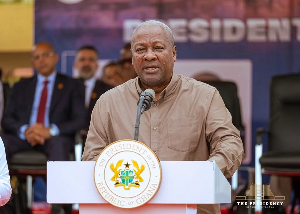
 Ato Boateng is the Deputy CEO of COCOBOD in charge of Finance and Administration