A fresh controversy is brewing over the National Democratic Congress government's planned rollout of a new electronic visa (E-Visa) system, with existing contractor TGN Digital Security Ghana Limited warning President John Dramani Mahama that proceeding with the initiative could expose the state to significant financial liabilities and potential judgment debts.
The dispute centres on claims by TGN Digital Security (GH) Ltd and its Swiss partner, Orrell Fussli Security Printing Switzerland Ltd (OFS), that they already hold a valid 10-year Public-Private Partnership (PPP) agreement with the Government of Ghana covering the automation of visa processing services, including E-Visa capabilities at the foreign missions and the Kotoka International Airport.
According to documents addressed to the Presidency, the Ministry of Foreign Affairs and other state institutions, the company argues that the proposed new E-Visa rollout duplicates systems and infrastructure already developed under an existing contract approved by Cabinet, authorised by the Public Procurement Authority (PPA), and ratified by Parliament.
The latest standoff emerged after the Ministry of Foreign Affairs announced plans to launch a new E-Visa platform as part of Ghana’s broader digital border management reforms.
However, TGN/OFS insists the government risks breaching binding contractual obligations if the new platform is implemented outside the framework of the current agreement.
In a strongly worded correspondence to Foreign Affairs Minister Samuel Okudzeto Ablakwa dated May 26, 2026, the company formally notified the government that the existing agreement signed on February 20, 2020, already covers online visa application systems, electronic payment platforms, digital travel authorisation capabilities and visa processing infrastructure.
The company said the contract’s initial support period spans from 2022 to 2027, with provisions for an automatic extension for another five years.
TGN/OFS maintained that the agreement remains “valid, active and un-terminated,” adding that no breach notices, performance default notices or termination procedures have ever been communicated to them by the government.
The company warned that introducing what it described as a “parallel third-party system” without structured engagement could amount to “material breach” and “constructive repudiation” of the existing contract.
According to the firm, core components of the E-Visa ecosystem have already been substantially completed and deployed under its current arrangement with the state.
The company listed several systems it claims are already operational, including online visa application tools, payment processing systems, ICAO-compliant Digital Travel Authorisation documents, centralised visa issuance databases hosted at the Ghana Immigration Service headquarters, public key infrastructure systems installed at the National Information Technology Agency (NITA), and verification infrastructure at the Kotoka International Airport.
TGN/OFS further stated that since the inception of the agreement, systems have been deployed across more than 40 Ghanaian diplomatic missions worldwide and at Accra’s international airport.
The firm also claimed to have invested heavily in local capacity building, technology transfer and employment generation in line with the local content policy objectives.
In a separate briefing memorandum addressed to Chief of Staff Julius Debrah, the company urged the Presidency to intervene and encourage an inter-agency technical and contractual review before any rollout proceeds.
The memorandum argued that the international reputation for respecting long-term PPP agreements could be damaged if the state is perceived to be bypassing existing contracts without due process.
The company further cautioned that parallel systems could lead to duplication of infrastructure, fragmented visa data management, cybersecurity vulnerabilities and operational inefficiencies.
The memorandum also highlighted the international standing of OFS, describing it as a Zurich-based digital security company listed on the Swiss Stock Exchange, with the Swiss National Bank identified as its largest shareholder.
Beyond the contractual concerns, allegations have also surfaced regarding the awarding of the new E-Visa project.
The claims accuse Presidential Executive Secretary Callistus Mahama of allegedly directing the Foreign Affairs Minister to award the contract to Rock Africa, a company reportedly linked to businessman Francis Gavor.
The allegations further claim that despite multiple notifications sent to the Presidency and the Foreign Affairs Ministry, government officials failed to formally respond to concerns raised by TGN/OFS.
No official response has yet been issued publicly by the Presidency, the Ministry of Foreign Affairs, or the officials named in the allegations.
The controversy comes against the backdrop of the government’s broader strategy to modernise the border security and travel systems through the expansion of the Advance Passenger Information and Passenger Name Records (API-PNR) platform.
Under a presidential directive issued after the August 2025 launch of the API-PNR system at the international airports, the government ordered the expansion of the platform to land and sea borders, integration with e-Gate systems at airports, and the development of a fully integrated E-Visa system.
The directive instructed the Ministries of Interior and Transport, the Ghana Immigration Service, the Ghana Civil Aviation Authority and the Ghana Revenue Authority to collaborate with contractors responsible for the API-PNR platform to execute the expansion project.
That directive has now become central to the ongoing dispute, with TGN/OFS insisting that any E-Visa implementation should be executed within the framework of the existing contractual arrangement rather than through an entirely separate platform.
The company says it remains committed to supporting the digital transformation agenda and has expressed willingness to scale and enhance the current system through structured engagement with the government.
General News of Tuesday, 26 May 2026
Source: www.ghanaweb.com
Mahama's new e-Visa rollout faces legal challenge over existing 10-year deal
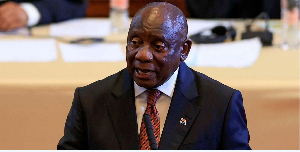
 President John Dramani Mahama at the event