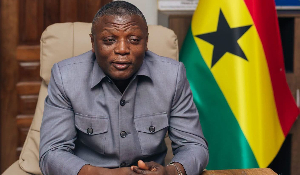
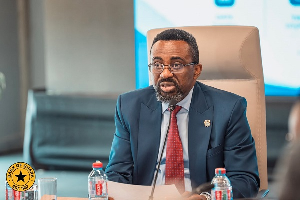
A policy analyst and Co-Chair of the Ghana Extractive Industries Transparency Initiative (GHEITI), Dr Steve Manteaw, has challenged claims by policy analyst Bright Simons regarding the legality of operations and gold sales at the Damang Mine.
Dr Manteaw argued that while the concerns raised about parliamentary ratification of mining leases were legitimate, the conclusions drawn were “flawed, selective and inconsistent” with long-standing precedent in Ghana’s mining sector.
The controversy followed claims by Simons that Engineers & Planners (E&P) and Damang Gold Mines Limited (DGML) could not legally sell gold before Parliament ratified the mining lease, arguing that the gold belonged to the State until ratification.
However, Dr Manteaw said the issue was being oversimplified.
“I have read on social media a write-up attributed to Bright Simons in which he raises fundamental questions that go to the heart of resource governance,” he stated.
According to him, the real issue is whether companies can legally operate while ratification processes are still pending.
Damang Gold Mine sells 100% of first gold output to GoldBod
He explained that neither the 1992 Constitution nor the Minerals and Mining Act, 2003 (Act 703), provides timelines for parliamentary ratification, nor do the laws place the responsibility for ratification on mining companies.
Historical precedent
Dr Manteaw noted that many mining companies in Ghana historically operated for years before their leases were ratified by Parliament.
He explained that under Section 13 of Act 703, once the Minerals Commission recommends approval and the Minister grants the mineral right, the holder is legally entitled to enter the land and begin operations.
According to him, DGML complied fully with all procedures required under Section 13.
“In the particular case of the Damang Gold Mines Limited concession, I am aware that every single step set out in Section 13 has been complied with, and there are documents to prove the same,” he said.
He stressed that the presence of E&P and DGML at the Damang concession is therefore “well grounded in law.”
Dr Manteaw disclosed that the companies have taken full operational and financial responsibility for the mine since April 18, 2026, including paying workers’ salaries and operational costs.
“Some of these payments were made even before the sale of the first gold from the mine,” he added.
Constitution broader than mining leases
Addressing Article 268 of the Constitution, Dr Manteaw argued that mineral rights are broader than signed mining leases and include undertakings, contracts and transactions “howsoever described.”
He said the Damang arrangement was necessary to prevent the mine from shutting down.
“The exigencies of the Damang situation required the Minister to enter into the transaction to prevent the mine from shutting down from April 18, 2026,” he stated.
He warned that halting operations pending ratification would have resulted in job losses, revenue losses and operational disruptions.
State revenue protected
Dr Manteaw also rejected suggestions that Ghana’s interest in the gold revenues had been compromised.
“I do not think the stake of the Government of Ghana in the revenue accruing from the sale of the gold has been compromised in any way,” he stated.
According to him, revenues from the gold sales have been retained within Ghana pending future reconciliation after ratification.
Dr Manteaw also questioned why indigenous firms were facing scrutiny that foreign mining companies historically escaped.
“I find it strange that even though almost all the foreign mining companies operating in Ghana did not obtain ratification of their leases before going into operation and selling the bulk of their gold overseas, we saw no reason to argue that the gold did not belong to the companies,” he stated.
“Let not the impression be created that the black man hates his own,” the policy analyst added.
Companies cannot be blamed
He argued that companies cannot be blamed for delays in parliamentary ratification because the responsibility lies with the Executive and Parliament.
“Technically, the answer is no. They cannot be blamed because the responsibility for ratification rests not on them, but on the Executive arm of Government and Parliament,” he explained.
He added that mining firms often rely on large loans and cannot indefinitely suspend operations while waiting for bureaucratic processes.
2019 case set precedent
Dr Manteaw also referenced a 2019 court case in which MPs sued the Attorney-General and 35 mining firms over operations without parliamentary ratification.
Despite the concerns raised, he noted that Government neither sanctioned the companies nor demanded refunds of gold revenues, with Parliament later ratifying the leases.
“This is the precedent that has been set,” he stressed.
“If we accommodated multinational companies on this score, why not our own indigenous company?” he asked.
He maintained that continuing operations at Damang while pursuing ratification was the prudent course of action.
Calls for reforms
While defending the Damang arrangement, Dr Manteaw acknowledged the need for reforms in the mining sector.
He urged government to amend Act 703 to establish clear timelines for parliamentary ratification and reduce bureaucratic delays.
He further argued that if strict pre-ratification restrictions are enforced, Government must compensate companies for losses caused by delays.
“Government must provide for compensation for any loss of potential revenue arising from delays in ratifying leases,” he stated.
Dr Manteaw maintained that the Damang issue must be assessed fairly and within the broader context of Ghana’s legal, historical and economic realities.
Business News of Monday, 25 May 2026
Source: www.ghanaweb.com
Bright Simons wrong on Damang gold sales claims - Dr Manteaw
 Dr Steve Manteaw, Co-Chair of the Ghana Extractive Industries Transparency Initiative (GHEITI)