Ghana’s cultural landscape is richly decorated with festivals that go far beyond colorful parades, drumming, dancing, and public celebrations.
Beneath the spectacle lies a deeper cultural, spiritual, political, and historical significance that has sustained communities for generations.
Many Ghanaian festivals serve as living archives of memory, identity, governance, morality, and ancestral connection.
While tourists and natives often experience the outward excitement of these celebrations, the hidden essence of Ghanaian festivals reveals profound lessons about unity, resilience, environmental stewardship, reconciliation, and traditional authority.
Festivals as Historical Memory
One of the lesser-discussed roles of Ghanaian festivals is their function as oral historical records. Before modern documentation systems, festivals preserved the stories of migration, wars, victories, survival, and state formation.
Homowo Festival
Celebrated by the Ga people of Ghana in Accra, the Homowo Festival literally means “hooting at hunger.” Although widely known for its traditional meals and street celebrations, its deeper meaning lies in commemorating a devastating famine once experienced by the Ga people.
According to the Ghana Tourism Authority, the festival symbolizes resilience, survival, and triumph over hardship after successful harvests ended a period of hunger.
The sprinkling of kpokpoi (traditional corn meal) during the festival is not merely ceremonial; it represents gratitude, remembrance, and communal healing.
Spiritual Connection
The festivals also serve as sacred spiritual moments linking communities with ancestors and deities assistance in navigating the difficult time.
Jirapa's 2026 Bong-Ngo Festival: A bold blueprint for cultural pride, regional growth
Aboakyir Festival
The Aboakyir Festival of the Effutu people in Winneba is famous for the dramatic deer hunt performed by rival Asafo groups. However, beyond the spectacle lies a spiritual covenant between the Effutu state and its deity, Penkye Otu.
Cultural historians explain that the hunted deer serves as a sacred offering symbolizing protection, continuity, and communal purification. The festival reinforces traditional beliefs about sacrifice, loyalty, and divine guardianship over the community.
Traditional Governance and Political Unity
Festivals in Ghana also strengthen systems of indigenous governance. Chiefs, queen mothers, clan heads, and traditional councils use festivals to reaffirm authority, settle disputes, and promote unity.
Odwira Festival
Among the Akuapem people, the Odwira Festival is not simply a celebration of purification. It historically functioned as a political gathering where chiefs reviewed the state of the kingdom, resolved conflicts, and renewed allegiance to traditional authority.
Akwaaba Festival 2026 postponed to July amid logistical challenges
According to cultural studies published by the Centre for National Culture, Odwira symbolizes cleansing, reconciliation, and political renewal.
The hidden essence of Odwira therefore lies in social restoration and collective accountability rather than entertainment alone.
Hogbetsotso Festival
The Hogbetsotso Festival, celebrated by the Anlo-Ewe people, commemorates their historic migration from Notsie in present-day Togo to escape oppression.
Yet cultural scholars note that the festival also includes practices emphasizing environmental discipline, communal labor, and respect for sacred spaces.
Traditional restrictions imposed during festival periods often helped preserve water bodies, forests, and communal lands long before modern conservation policies emerged.
Festival as Identity and Resistance
Hogbetsotso festival is also celebrated to preserve collective identity and resistance against historical oppression.
Fetu Afahye
The Fetu Afahye Festival of the Oguaa people in Cape Coast originated partly as a purification rite after epidemics and social crises.
Historians argue that the festival gradually evolved into a symbol of resilience and communal rebirth during periods of colonial disruption and economic hardship.
Today, beyond the durbars and processions, the festival serves as a reminder of historical endurance and cultural pride.
Economic and Social Bonds
Many Ghanaians deem this festival as a way to contribute to local economies through tourism, trade, hospitality, and cultural exhibitions. However, their hidden social role remains equally important.
Festival often:
• reunite families,
• strengthen clan relationships,
• encourage community development,
• and create spaces for intergenerational learning.
Damba Festival
The Damba Festival, celebrated among Dagomba communities and other northern ethnic groups, combines Islamic influence with indigenous tradition.
According to the Ghana Museums and Monuments Board, Damba is deeply connected to chieftaincy, social cohesion, and communal identity rather than purely religious celebration.
Its elaborate horse processions and drumming ceremonies reinforce social hierarchy, loyalty, and cultural continuity.
Preserving the Soul of Ghanaian Festivals
The hidden essence of Ghanaian festivals lies not only in celebration, but in the preservation of memory, spirituality, governance, morality, and identity. These festivals continue to function as bridges between the past and the present, linking generations through storytelling, ritual, and communal experience.
As Ghana modernizes and expands its cultural tourism industry, many traditional leaders and scholars argue that protecting the deeper meaning of festivals is essential to preserving the country’s cultural soul.
Beyond the drums, dancing, and colorful regalia, Ghanaian festivals remain powerful expressions of who communities are, where they came from, and the values they hope to pass on to future generations.
VPO/EB
General News of Sunday, 24 May 2026
Source: www.ghanaweb.com
Aboakyir, Damba, Hogbetsotso: Behind the rituals and the culture of festivals
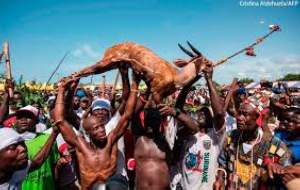 File photo from Aboakyir festival