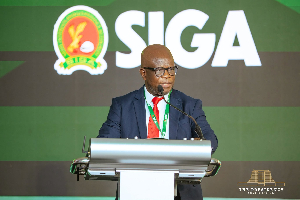
Dr Johnson Pandit Asiama, Governor of the Bank of Ghana, says the central bank has established specialised departments on artificial intelligence, data analytics and virtual assets to strengthen oversight of Ghana’s evolving financial sector.
He said the move formed part of efforts to ensure the central bank kept pace with rapid technological transformation in global finance.
“We noticed that there was little going on by way of artificial intelligence, data analytics and what have you, and so we decided to set up a department quickly to learn,” he said.
Dr Asiama was speaking at a fireside chat on the future of monetary governance, digital transformation, interoperability and financial stability during the ACI Financial Markets World Congress in Accra.
Dr Asiama explained that the Bank of Ghana had also observed growing activity around virtual assets and stablecoins but with limited regulatory visibility.
“And so again, we decided to set up a new department, pass a VASP law, and begin to introduce some level of supervision there,” he stated.
The governor said the structures were now in place to help regulators better understand developments in the digital finance ecosystem and work closely with market players.
He recalled that Ghana had initially lagged behind in the fintech space because the market evolved faster than regulation.
According to him, when he served as Deputy Governor in 2016, the Bank of Ghana had no dedicated Payment Systems Department.
“I remember I went to my governor, and I said, ‘Mr Governor, we are late. We are behind the markets. Let’s set up a dedicated Payment Systems Department so we can catch up,’” he recounted.
Dr Asiama said the establishment of the Payment Systems Department in 2016 later led to the creation of a Fintech Department, which had since contributed significantly to innovation within Ghana’s financial sector.
He disclosed that the central bank was currently considering a dedicated regulatory framework specifically for fintech companies to improve supervision and allow specialised oversight.
“That way, we can specialise. That way, we can allow them that space to go hand in hand with industry,” he said.
Dr Asiama noted that several African countries, including South Africa and Kenya, were also adopting similar approaches to financial sector innovation and regulation.
He said the Bank of Ghana believed consultative engagement among regulators, innovators and investors was essential to promoting innovation without compromising financial stability.
Business News of Saturday, 23 May 2026
Source: www.ghanaweb.com
BoG sets up AI, Virtual Assets Departments to strengthen financial sector oversight
 Dr Johnson Pandit Asiamma is Governor of the Bank of Ghana