Ghana is expected to launch its first non-interest banking institution this year, marking a significant step in diversifying the country’s financial sector.
The Governor of the Bank of Ghana (BoG), Dr Johnson Pandit Asiama, said one indigenous bank has formally applied for a non-interest banking licence, while four others are preparing to submit applications to the Central Bank.
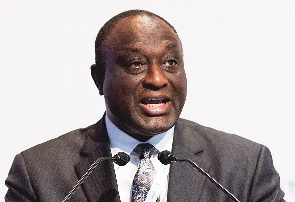
Speaking at the end of the 130th Monetary Policy Committee meeting in Accra on Wednesday, Dr Asiama said the regulatory and supervisory framework for non-interest banking is well advanced, following the publication of comprehensive guidelines in January 2026.
“A lot has been done. Hopefully this year, we’ll see the first licence. They are working very hard, putting in place the structures. The regulatory structures are very stringent. I can assure you this is best practice,” he said.
Dr Asiama said the framework is aligned with international best practices to ensure the safe and effective operation of the new banking model.
“I have no fears at all. The necessary structures are being put in place to ensure that non-interest banking thrives,” he added.
He commended Professor John Gartchie Gatsi, Advisor on Non-Interest Banking at the BoG, for leading efforts to establish robust systems to enhance public confidence in the sector.
Dr Asiama said the Head of the Banking Supervision Division is directly involved in the process to ensure continuity between policy formulation and regulatory oversight.
He noted that the initiative is being introduced at a time when Ghana’s domestic economy is showing resilience despite external challenges, adding that recent macroeconomic stability provides a strong foundation for introducing innovative financial products.
The Governor reiterated that the BoG remains solvent and capable of executing its mandate while promoting innovation without compromising financial stability.
Professor Gatsi said the introduction of non-interest banking will improve access to capital for businesses, particularly small and medium-sized enterprises (SMEs), which often struggle to secure financing at commercial lending rates.
“This will give individuals and businesses an alternative to conventional banking services without compromising regulatory standards,” he told the Ghana News Agency after the MPC press briefing.
He urged businesses to see non-interest banking as an opportunity to expand operations, hire more staff, and contribute to economic growth.
Professor Gatsi added that the profit-and-loss sharing structure of non-interest banking encourages financial discipline among borrowers.
He called on prospective operators to adopt strong credit assessment systems comparable to venture capital financing models.
“This will ensure that only entities with a genuinely high probability of success are able to access funding, while protecting the integrity and sustainability of the non-interest banking system from its inception,” he said.
Business News of Friday, 22 May 2026
Source: GNA
Ghana set to launch first non-interest bank in 2026 - BoG Governor
 Dr Johnson Pandit Asiama, Governor of the Bank of Ghana (BoG)