The Japan International Cooperation Agency (JICA) has called for Ghana to adopt the Kaizen philosophy as a national development approach to improve productivity, public sector efficiency, and business competitiveness.
This was contained in a speech delivered at a High-Level Awareness Seminar on “Kaizen for Ghana: Unlocking National Productivity, Business Growth and Public Sector Excellence,” held on May 21, 2026, at the Accra City Hotel.
Speaking on behalf of JICA, the Country Representative, Takayuki Uchiyama, said Ghana’s development agenda requires a stronger focus on continuous improvement, discipline, and efficiency across both public and private institutions.
He explained that Kaizen, a Japanese concept meaning “continuous improvement through small, practical, and consistent actions,” has been central to Japan’s post-war economic transformation and industrial growth.
“Kaizen simply means continuous improvement through small, practical, and consistent actions,” Uchiyama noted, adding that it promotes accountability, teamwork, innovation, and quality service delivery.
According to him, institutionalising Kaizen in Ghana would help improve efficiency in public institutions, strengthen productivity among local industries and SMEs, enhance service delivery, and build a stronger culture of professionalism.
He stressed that national transformation must go beyond infrastructure investment and policy reforms, arguing that sustainable progress depends on a mindset shift in how people work and solve problems.
“National transformation does not begin with large investments alone. It begins with changing how we work, how we manage time, how we solve problems, and how we take ownership of our responsibilities,” he said.
The JICA representative noted that Ghana’s labour productivity grew by 3.06 percent in 2024, according to the Ghana Statistical Service, but remains below the long-term average of 6.06 percent recorded between 1992 and 2024.
He also highlighted persistent structural inefficiencies, bureaucratic delays, skills mismatches, and weak workplace systems as key challenges affecting productivity.
He urged Ghana to move from isolated Kaizen initiatives to full national institutionalisation of the system, similar to Ethiopia, which has integrated Kaizen into its industrial and public sector reforms through a national excellence centre.
The JICA representative also noted that Ghana and Japan will mark 70 years of diplomatic relations in 2027, expressing optimism that cooperation between the two countries will deepen in innovation, institutional reform, and sustainable development.
He concluded that Kaizen should not remain a project-based approach but evolve into a national development philosophy that supports Ghana’s economic transformation agenda, including the RESET Agenda and the government’s 24-Hour Economy initiative.
The seminar was attended by the Chief of Staff at the Office of the President, Julius Debrah, representatives from UNIDO, the 24-Hour Economy Authority, chief executives, and development partners.
In his remarks, Debrah reiterated the government’s commitment to addressing Ghana’s infrastructure and economic challenges under the leadership of President John Dramani Mahama.
He said the administration is focused on improving productivity, strengthening institutions, and accelerating economic transformation through coordinated national policies.
Business News of Thursday, 21 May 2026
Source: www.ghanaweb.com
JICA calls for national adoption of Kaizen to boost Ghana's productivity
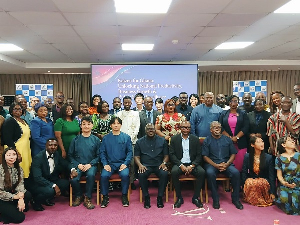 The seminar was attended by the Chief of Staff at the Office of the President, Julius Debrah