The Minister for Trade, Agribusiness and Industry, Elizabeth Ofosu-Adjare, is leading a high-level Ghanaian delegation to the People’s Republic of China to deepen bilateral economic relations and attract investment into Ghana’s industrial and agribusiness sectors.
The mission, undertaken on the directive of President John Dramani Mahama, forms part of the government’s RESET Agenda aimed at promoting industrial transformation and positioning Ghana as a leading trade and investment hub in Africa.
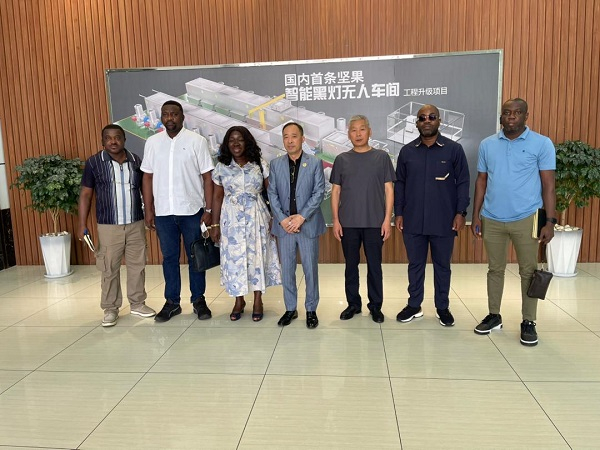
The delegation includes officials from the Ministry of Food and Agriculture, VALCO, the Ghana Free Zones Authority, the Ghana Investment Promotion Centre (GIPC), and private sector partner Sentuo Group, among others.
Meet Ghana's new richest stockholder
As part of the visit, the team is participating in the China–Ghana Investment Forum, where the Trade Minister is expected to present Ghana’s investment opportunities and outline government’s industrialisation agenda.
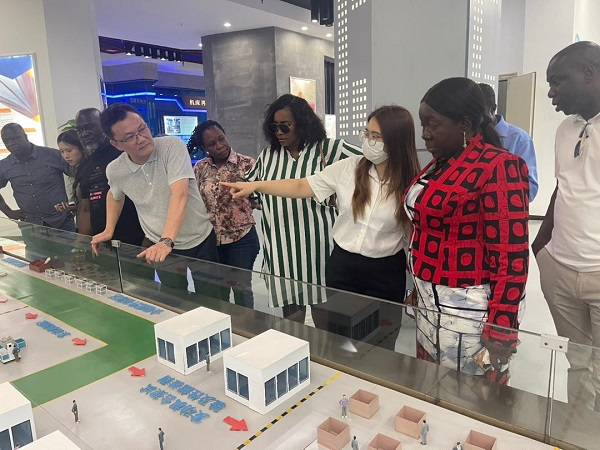
The delegation has also toured industrial facilities in Hubei and Wuhan provinces, including maize milling and silo plants, fertilizer production facilities, chemical industrial parks and agro-processing systems.
The visits are intended to support Ghana’s plans to develop integrated agro-industrial value chains linking production, storage, processing and export.
Government says the model aligns with President Mahama’s vision of building a “maize economy” that ensures local production is processed and exported to add value and create jobs.
“We will not allow Ghanaian maize to go to waste. We will buy it, process it, export it, and turn agriculture into industry,” President Mahama said.
He added: “Ghana is no longer thinking only about growing maize — we are building a complete maize economy. From silos to processing plants, from farmers to exports, we are creating an industrial value chain that guarantees markets for our farmers, creates jobs for our youth, strengthens food security, and earns foreign exchange for our nation.”
The delegation also held discussions on fertilizer production and agricultural input manufacturing, including opportunities in NPK and urea fertilizer production, agrochemicals, storage systems, logistics, and technology transfer.
Officials say the initiative is expected to reduce Ghana’s dependence on imported fertilizers, stabilize prices, and improve agricultural productivity under the Feed Ghana Programme.
Discussions also covered recycling, pharmaceuticals, plastics, and agro-processing industries, with a focus on attracting Chinese investment and technology into Ghana.
The Trade Minister is also expected to promote Ghana’s position as a gateway to West Africa under ECOWAS and the African Continental Free Trade Area (AfCFTA), highlighting the country’s investment potential.
Deputy Minister for Food and Agriculture, John Dumelo, is part of the delegation alongside other senior government and private sector officials.
Business News of Thursday, 21 May 2026
Source: www.ghanaweb.com
Ghana courts Chinese investment in agro-industrial transformation push
 The mission was undertaken on the directive of President John Dramani Mahama