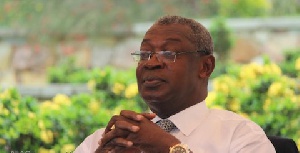
Chairman of the Ghana Medical and Dental Council, Professor Agyemang Badu Akosa, has defended the decision to disclose the names of health workers in a recent committee report, insisting that transparency and public accountability must take precedence in healthcare investigations.
Speaking on Channel One TV on May 20, 2026, Professor Akosa responded to concerns raised by the Ghana Medical Association (GMA), which argued that identifying healthcare professionals in the report was unfair.
According to him, investigative committees are mandated to establish facts in the public interest, adding that professional bodies must be willing to confront lapses in healthcare delivery rather than shield colleagues from scrutiny.
“If we had not named, we would have seen some cover-up. These are the professionals, they cover it for their own colleagues,” he stated.
Professor Akosa, who is a former president of the GMA, stressed that healthcare professionals should not hide behind anonymity when issues of patient care arise.
“I still insist on proper patient care. You the doctor, you introduce yourself to the patient. My name is Professor Akosa, I am so-so and so, and I’m coming to see you. That is the proper way of patient care,” he explained.
'Don't treat health workers as scapegoats' - GMA president reacts to Amissah death report
He argued that while the GMA exists to protect the welfare of doctors, it also has a responsibility to hold members accountable when standards are compromised.
“Yes, it’s a union and you are there to protect the welfare of your people, but for Christ’s sake, if your people do things, particularly in healthcare delivery and their professional life, you should be able to call them to question,” he said.
Professor Akosa maintained that the report was conducted independently and comprehensively in the interest of public accountability.
“This is a public interest and public accountability issue,” he stressed.
He also clarified that the committee deliberately used the phrase “medical neglect” instead of “medical negligence,” explaining that negligence is a legal term.
“When you said Charles Amissah did not die from trauma, but from medical neglect… that’s a very big thing to say,” he remarked.
According to him, the patient reportedly bled continuously for between 20 and 32 minutes without any effective intervention to stop the bleeding.
“This gentleman bled all the way from 22:32 right down to his death, and there was nowhere where there was an intervention to stop the bleeding,” he said.
Professor Akosa further pointed to failures by emergency responders, particularly ambulance personnel, as part of the chain of medical neglect identified in the report.
“The Emergency Medical Technicians did not pack the wound properly to stop the bleeding,” he alleged.
He explained that by the time the patient arrived at the Police Hospital, he was still bleeding heavily.
“If they had intervened and packed properly and set up an IV line, this patient would not have died. So for me, that is where the medical neglect starts,” he stated.
Watch video below
Prof. Agyemang Badu Akosa, Chairman of the Ghana Medical and Dental Council responds to concerns from the GMA, noting that investigative committees are mandated to establish facts in the public interest and that professional bodies must also confront lapses in clinical care when… pic.twitter.com/ZudGJvNjS0
— CITI FM 97.3 (@Citi973) May 21, 2026
VPO