Managing Editor of the Insight Newspaper, Kwesi Pratt Jnr, has weighed in on the ongoing debate surrounding the arrest and detention of Bono Regional Chairman of the New Patriotic Party (NPP), Kwame Baffoe, over comments he made about a judge.
Speaking on Metro TV’s Good Morning Ghana programme on May 20, 2026, Kwesi Pratt Jnr emphasised that although Ghana’s Constitution guarantees freedom of expression, that right is not absolute and is subject to legal limitations.
According to him, the principle of free expression remains essential for democratic growth and societal progress.
“I think first and foremost we need to state the principles, and my study of history reveals that any position, any view, which has become dominant today, or even proven scientifically, started as a minority viewpoint,” he stated.
'If Abronye dies, you will never have peace in your life' – Maurice Ampaw warns judge
Using historical examples, Pratt argued that unpopular opinions have often gone on to shape human progress, stressing the importance of protecting free speech.
“If you don’t encourage the right of free expression, you stifle debate, you stifle discussion, and you make it impossible for society to progress,” he said.
He noted, however, that constitutional rights must always be exercised within the boundaries of the law and with respect for public interest and the rights of others.
“Anybody who wants to see this country or any other country advance must uphold the principles of free expression. It is absolutely important,” he added.
Kwesi Pratt explained that the 1992 Constitution itself places restrictions on freedom of expression and cited provisions under Chapter 12 of the Constitution to support his argument.
“The Constitution, which is the supreme law of this land, sets a fetter. It’s not absolute,” he stressed.
To illustrate his point, he argued that threatening statements against national leaders could not be defended under freedom of speech protections.
“You are stopped from making a public declaration that you will kill the president and his wife and put their bodies in cocoa sacks. If you make such a pronouncement, it is indefensible,” he stated.
According to him, arrests made over such comments should not automatically be interpreted as violations of constitutional rights.
“And if you’re arrested for making such pronouncements, it cannot be seen as a violation of the right of free expression,” he explained.
Kwesi Pratt further argued that no country in the world permits completely unrestricted speech.
“There’s no country anywhere that I know of where you can make unguarded statements and walk free,” he remarked.
He also criticised the opposition NPP over its recent petition to the Dean of the Diplomatic Corps regarding alleged violations of human rights and political intimidation in Ghana.
The veteran journalist said he was embarrassed to see Members of Parliament presenting a petition to the Moroccan Ambassador, who serves as Dean of the Diplomatic Corps, seeking international intervention.
“I saw members of Parliament of the NPP actually presenting a petition to the Moroccan ambassador, calling for intervention in Ghana for the respect of the fundamental rights of our people. And I’m wondering, my goodness, what is this?” he questioned.
The comments come amid heightened political tensions following the detention of Abronye DC over allegations of offensive conduct likely to breach the peace and publication of false statements against a judge.
VPO
General News of Wednesday, 20 May 2026
Source: www.ghanaweb.com
Is Abronye's detention political persecution? - Pratt sets the records straight
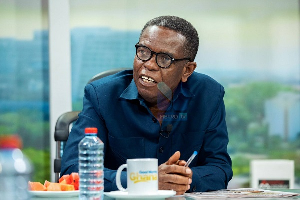 Kwesi Pratt Jnr is the Managing Editor of the Insight Newspaper