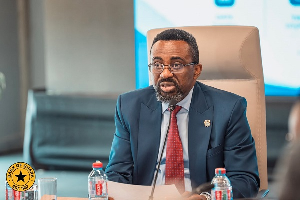
The high-powered delegation from the government of Malawi, led by its Minister of Natural Resources, Patricia Wiskies, visited Ghana to learn from the success story of the West African country’s carbon market, as well as its waste management and single-use plastics regulation.
At the opening of the learning visit in Accra on May 8, 2026, Patricia Wiskies indicated that her government was in Ghana to learn because of the progress the country had made in the establishment of a carbon market as part of efforts to mitigate the impact of global warming.
She was particularly impressed by the institutions put in place by the government of Ghana to establish a working carbon market, which is one of the best on the African continent.
“Malawi greatly appreciates Ghana's leadership in advancing practical implementation of carbon markets in Africa. Ghana has distinguished itself as one of the continent’s leading examples in operationalising the Article 6 mechanisms through the establishment of a dedicated carbon market office, a functioning carbon registry system, prioritisation of operational arrangements, and active mitigation projects already delivering results.
“As Malawians, we come not merely to discuss concepts and theories. We have come to learn from a fellow African nation that has moved from readiness to implementation,” she said.
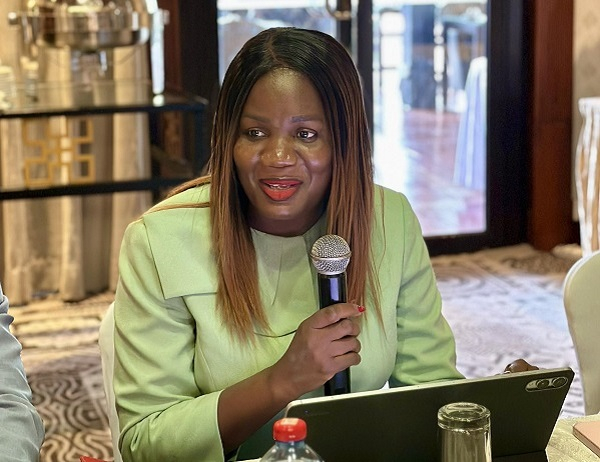
Malawi's Minister of Natural Resources, Patricia Wiskies
She added, “We are particularly interested in understanding the institutional arrangements, legal frameworks, authorisation systems, registry operations, investor engagement mechanisms, and benefit-sharing models that have enabled Ghana to make tangible progress.”
She also stated that her country was particularly interested in learning how “Ghana balances investor confidence with the protection of national interests and nationally determined contributions.”
The Natural Resources Minister also said that carbon markets are not only important in the fight against climate change but also to the development of the countries most affected by it.
She indicated that they also help African countries, which are disproportionately affected by climate change, secure funds for development activities.
“Climate change continues to threaten our economies, ecosystems, food systems, water resources, and communities. For us, carbon markets are therefore not only climate instruments. Carbon trade is not merely about transactions; it is a development tool capable of enabling development finance to support sustainable agriculture, forestry, deforestation, clean cooking solutions, renewable energy expansion, waste management, job creation, and, most importantly, promoting community resilience."
She added that her country was committed to building a carbon market system that is credible, transparent, environmentally sound, and nationally beneficial.
On his part, Ghana’s Minister of State in charge of Climate Change and Sustainability, Seidu Issifu, while touting the progress Ghana has made with the establishment of a carbon market, pointed out that the country also has something to learn from the Malawians.
“This peer learning engagement is more than an exchange of ideas. It is an opportunity to deepen South-South cooperation, strengthen institutions, and build practical solutions that can be replicated across the continent. I am confident that these interactions over the next two days will provide valuable insights to advance Malawi's carbon market ambitions, while also enriching Ghana’s own through mutual learning,” he said.
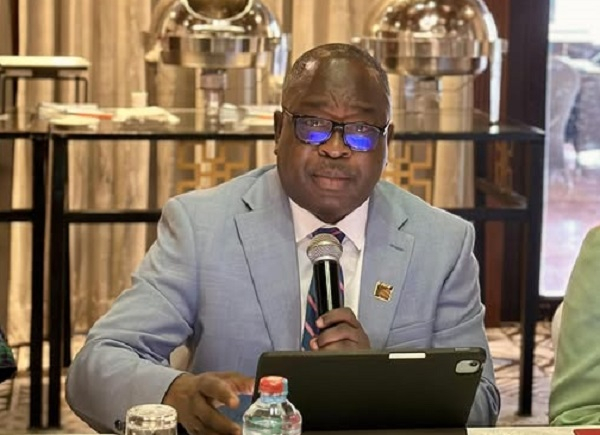
Seidu Issifu
The minister of state also stated that the discussion on waste management was important, saying: “Beyond carbon markets, today's discussions on waste management and single-use plastics are equally important. Environmental sustainability cannot be achieved without addressing pollution, strengthening circular economy systems, and promoting responsible production.”
The United Nations Development Programme (UNDP) Resident Representative in Ghana, Niloy Banerjee, whose organisation facilitated the engagement, also praised Ghana’s achievements in the fight against climate change, especially the establishment of a functioning carbon market.
Niloy Banerjee
He indicated that the engagement is important because it fosters regional collaboration in the fight against climate change.
“At a time when countries are looking for credible and practical pathways to climate finance, Ghana’s experience shows the growing potential of carbon markets to drive investment, support low-carbon development, and create measurable impact across sectors. This exchange with Malawi is an opportunity to share lessons, strengthen systems, and advance regional cooperation on climate action,” he said.
BAI
3i Africa Summit 2026 - DAY 3
AROUND TOWN: Transport chaos hits Madina as drivers, passengers voice frustration
Business News of Monday, 11 May 2026
Source: www.ghanaweb.com
Malawi turns to Ghana for lessons on carbon markets and waste management
 Scenes from day one of the learning visit