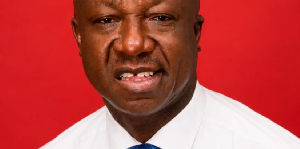
GhanaWeb wishes to apologise for the wrong use of a photo for this story when it was first published. Our attention was drawn to the error and the necessary steps have been taken to correct the photo used, as is currently the case. The portal regrets any inconveniences caused in the use of the wrong photo.
Managing Director of Enapa Farms at Yawhima, near Sunyani, in the Bono Region, has called on the Mahama government to ensure transparency and fairness in the distribution of resources under its poultry intervention initiatives, particularly the “Nkoko Nkitikiti” programme.
Augustus Annan said that while such policies were laudable and had the potential to revive the poultry sector, their impact would only be felt if resources reached genuine farmers actively engaged in production.
“When I first heard about the programme, I was incredibly happy as a farmer because we all thought it was coming to boost the poultry business. But it came, and some of us did not benefit.
“We are still hopeful that future distributions will be fair,” he told Benjamin A Commey of the Ghana News Agency (GNA) in an interview.
The Nkoko Nkitikiti programme is a government initiative aimed at supporting poultry farmers with birds and inputs to increase local production of eggs and poultry products, reduce imports, and create jobs.
As of late last year, the government said it had distributed 720,000 birds to some 13,000 farmers across 12 districts.
Annan, who said he had made an application for the birds but was unsuccessful, expressed concern about the project’s success if it fails to reach the right targets.
Similar interventions in the past, he noted, had not always achieved their intended purpose due to poor targeting, and he urged due diligence in the distribution process.
“Sometimes these supports go to people who have no idea about poultry farming. When that happens, they end up selling the birds to those of us already in the business,” he said.
“Government must do due diligence so that the support gets into the right hands.”
Touching on the state of the poultry industry in Sunyani and its environs, Annan described it as promising, but high production costs and market fluctuations remained a major hindrance to achieving its full potential.
His farm, which currently has about 2,500 birds, produces between 64 and 65 crates of eggs daily, but like many others, had to scale down operations last year due to poor patronage.
“If you cast your mind back to last year, the market was very bad. Eggs were choked in the system, and patronage was low, so we had to reduce our stock to manage the situation,” he said.
Annan noted that although the situation had improved marginally this year, poultry farmers continued to grapple with rising feed costs, unpredictable weather conditions, and disease outbreaks.
“In terms of production, feed remains a major challenge. Last year, maize prices were between GH¢700 and GH¢900 per bag, though it has reduced somewhat now. But other inputs like soya keep increasing, which affects our operations,” he added.
Annan also highlighted the lack of regular extension services, saying farmers largely depended on veterinary officers, especially during disease outbreak emergencies, a situation that cost them a lot of money.
He therefore appealed to the relevant authorities, particularly the Ministry of Food and Agriculture, to provide poultry farmers with veterinary services to curb potential disease outbreaks.
Despite the challenges, Annan said the sector remained viable, revealing plans to expand his farm in the near future to a new site to increase production and create employment.
“With the right support, we can expand and employ more people. Before we reduced our stock, we had about six workers. Expansion will help us absorb more of the unemployed youth,” he said.
He appealed to financial institutions to support poultry farmers with accessible credit facilities, stressing that collaboration among stakeholders was key to sustaining the industry.
Additionally, Annan advised young people to consider venturing into poultry farming, noting that although capital-intensive, the sector could be rewarding if properly managed.
“The job market is choked, so we should not always rely on government jobs. Poultry farming is a good business if you have the passion and are able to manage it well,” he said.
Business News of Monday, 4 May 2026
Source: theheraldghana.com
Poultry farmer demands transparency, fairness in Nkoko Nkitikiti distribution
 Augustus Annan is the Managing Director of Enapa Farms at Yawhima