Former Deputy Minister of Finance, Abena Osei-Asare, has raised fresh concerns about the financial health of the Bank of Ghana, warning that its growing losses could eventually place a burden on taxpayers.
Her concerns follow the release of the central bank’s 2025 audited financial statements, which show a sharp deterioration in its balance sheet.
The bank’s negative equity widened from GH¢58.62 billion in 2024 to GH¢93.82 billion in 2025, while annual losses also surged from GH¢9.49 billion to GH¢15.63 billion.
Securitisation, guarantees key to unlocking diaspora bond demand
In a statement shared on her Facebook page on Sunday, May 3, 2026, Osei-Asare described the figures as troubling and called for urgent transparency and accountability in addressing the situation.
She is therefore demanding full disclosure of the government’s recapitalisation strategy, including details of any agreements and financing arrangements.
“I demand publication of the full recapitalisation MoU and the fiscal implications of any bonds, cash injections or write-offs,” she said.
According to her, this planned intervention could have wider implications for Ghana’s public finances if not carefully managed and fully disclosed.
“That means today’s losses become tomorrow’s taxpayer cost, debt instrument, or fiscal trade-off,” she added.
The former deputy finance minister stressed that the development should not be treated as a routine accounting issue, especially as government has already committed to restoring the bank’s capital base.
“The BoG’s own 2025 accounts acknowledge government’s obligation to restore the capital base through a phased recapitalisation programme from 2026 to 2032,” she stated.
Describing the GH¢93.82 billion negative equity as a “fiscal warning signal,” she cautioned that the issue should concern not only policymakers but also the general public.
“A functioning central bank with a GH¢93.82 billion negative equity hole is still a public finance problem, regardless of its operational continuity,” she emphasised.
Osei-Asare further called for strict oversight of the process, insisting that any recapitalisation involving public funds must be transparent and subject to parliamentary scrutiny to protect the national purse.
SO/SA
We are helping solve Ghana's unemployment rate - Esinam Adablah
Business News of Monday, 4 May 2026
Source: www.ghanaweb.com
BoG recapitalisation plan faces scrutiny as Osei-Asare demands full disclosure
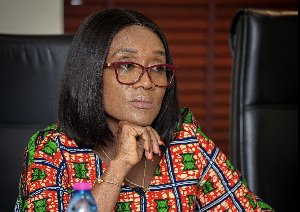 Former Deputy Minister of Finance, Abena Osei-Asare