The Chairman of the National Development Planning Commission, Dr Nii Moi Thompson, has called on Metropolitan, Municipal and District Assemblies (MMDAs) to establish designated auto zones as part of wider efforts to restore discipline and order in Ghana’s spatial planning system.
Speaking at the media briefing on NDPC’s Strategic Regional Engagements on April 29, 2026, Dr Thompson lamented the growing trend of indiscriminate car sales across the country, describing it as a manifestation of lawlessness that undermines development.
He further explained that the uncontrolled spread of car dealerships into public spaces has worsened flooding and environmental degradation, as open lands are paved over with concrete, leaving little room for water absorption stressing that auto zones designated areas for vehicle sales would bring order, protect the environment and ensure safer communities.
Dr Thompson also warned that the absence of proper spatial planning forces government to divert resources from critical sectors such as education into disaster relief and relocation efforts.
Beyond the issue of auto zones, Dr Thompson highlighted broader structural challenges facing Ghana’s development agenda.
He pointed to persistent disconnects between national plans and budgets, as well as between spatial planning and sectoral planning in agriculture, industry and services.
He revealed that NDPC has begun engagements with the Land Use and Spatial Planning Authority (LUSPA) to bridge these gaps, ensuring that the physical manifestation of development is clear, orderly and disciplined.
The Chairman assured that the Commission is working diligently to fulfill the President’s mandate of consolidating multiple fragmented development plans into a coherent national framework by the end of the year.
He underscored that discipline in both spatial and sectoral planning is central to achieving sustainable development and meeting the SDGs.
President Mahama reacts to Trump White House shooting incident
'I have forgiven her' — Pentecost Chairman responds to Dr Mary Awusi
Business News of Thursday, 30 April 2026
Source: National Development Planning Commission
NDPC chair urges MMDAs to create auto zones to restore discipline in spatial planning
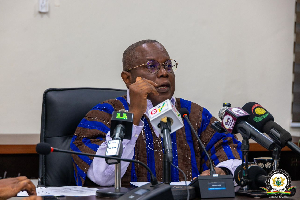 Chairman of the National Development Planning Commission, Dr. Nii Moi Thompson,








Opinions