The convenor of the OneGhana Movement, Senyo Hosi, has defended the Attorney General, Dominic Akuritinga Ayine, against claims of hostility towards the Office of the Special Prosecutor, while urging the AG to adopt a more policy-driven approach to the ongoing legal dispute over the OSP’s prosecutorial powers.
Speaking on PM Express on JoyNews, Hosi commended the Attorney General for his role in shaping the law that established the Office of the Special Prosecutor (OSP).
He described him as “a great lawyer… a great academic” who was instrumental in refining the legislation that created the anti-corruption body.
Hosi rejected suggestions that the Attorney General was seeking to undermine the OSP, insisting that his position in the current dispute reflected a strict legal interpretation rather than a political agenda.
“I don’t think that he actually meant anything here,” he said. “He’s a pure academic. He’s giving his own personal opinion at a particular point in time," he said.
The comments come amid a legal and political debate over whether the OSP has the independent authority to prosecute corruption cases without explicit authorisation from the Attorney General.
A recent High Court ruling has cast doubts on that authority, effectively stalling several ongoing prosecutions and prompting a broader constitutional challenge now expected to be resolved by the Supreme Court of Ghana.
While defending the Attorney General’s motives, Hosi urged him to move beyond a purist’s legal reading of the issue and consider the broader policy intent behind the OSP’s creation.
“I think that in taking those decisions, the office [of the Attorney General] must look more at the policy essence and value,” he said.
He pointed to Ghana’s legal tradition of adopting a “modern purposive approach” to interpretation, arguing that the focus should be on the underlying objective of the law rather than a strict technical reading.
“What really was the intent? What is it that we really want to achieve?” he asked.
Hosi said the OSP was created in response to strong public demand for an independent body to prosecute corruption, particularly in cases involving politically exposed persons.
“We needed to have somebody who independently prosecutes corruption,” he said, describing the passage of the OSP law as the result of a 'strong groundswell'," he indicated.
He stressed that the fight against corruption was not merely a legal issue but a constitutional and societal obligation.
“Corruption is a canker. It destroys the very fabric of our society,” he said.
The ongoing legal dispute is focused on the interpretation of Article 88 of the Constitution, which vests prosecutorial authority in the Attorney General but allows for delegation.
Hosi maintained that the law establishing the OSP already provides that authorisation, arguing that the focus should now be on strengthening the institution rather than weakening it.
“If you think that you want to withdraw it, go through the process and repeal the act,” he said.
He warned that reducing the debate to technical legal arguments risked undermining the broader national objective of tackling corruption.
Hosi argued that governance requires more than strict adherence to legal form, emphasising the importance of values in public decision-making.
“Governance is not just about laws. It’s even more about values,” he said. “The constitution is not just a legal document. It is a promise on how we as a people want to live.”
He urged policymakers to ensure that their actions align with the constitutional commitment to probity and accountability.
Hosi also called for closer collaboration between the Attorney General and the OSP, saying both institutions should be working together to strengthen the fight against corruption.
“We should have had a situation where we have an Attorney General and an OSP who cooperate to optimise this fight [against corruption],” he said.
He added that the Attorney General had an opportunity to align legal interpretation with the policy goals that led to the creation of the anti-corruption office in the first place.
With the matter now before the courts, he said the focus should be on ensuring that legal outcomes support, rather than frustrate, the broader public interest.
“We, the people of Ghana, believe that our OSP must maintain its independence,” he said.
General News of Wednesday, 29 April 2026
Source: www.ghanaweb.com
Senyo Hosi praises Dr Ayine’s role in OSP creation
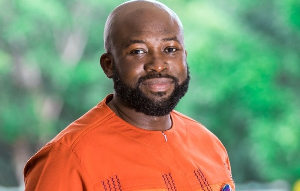 Senyo Hosi is the convenor of the OneGhana Movement