The night was golden in Paris. Under the soft glow of chandeliers and flashing cameras, Ousmane Dembélé stood on the stage, the Ballon d’Or resting gently in his hands. For a brief second, he didn’t move.
He just stared at it as tears dropped from his eyes, as if measuring the distance between who he once was and who he had finally become.
To many watching, this was simple: the best player in the world being crowned after a season of brilliance. But beneath the surface, it felt heavier than that.
It felt like redemption. Not just for Dembélé, but for every young footballer who had once been told they were next in line — the next Messi, the next Gerrard, the next Iniesta — and never made it here.
Because football has a pattern. A cruel, repeating pattern. It finds a teenager, wraps him in expectation, and hands him a future before he has lived his present. The stadiums rise for him early. The comparisons come even earlier. And somewhere between the noise and the pressure, something breaks.
Before Dembélé, there were others. So many others.
Jack Wilshere – The Night He Took on Barcelona
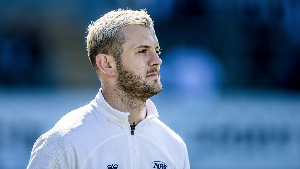
February 2011. Arsenal vs Barcelona. A Champions League night thick with tension and brilliance. In midfield, surrounded by the greatest passers of a generation — Xavi and Andrés Iniesta — a teenager refused to be intimidated.
Wilshere didn’t just survive that night. He owned it.
He demanded the ball, twisted away from pressure, and played with a composure that didn’t belong to a 19-year-old. Commentators were stunned. Pundits didn’t hesitate. England had found its Iniesta. Some even whispered Paul Scholes.
For a country that had long searched for a technically gifted midfield conductor, Wilshere felt like the answer. This wasn’t just talent — this was destiny unfolding.
But destiny has a way of slipping.
The injuries began quietly, then relentlessly. Ankles, stress fractures, long spells on the sidelines. Each comeback carried hope; each setback took a piece of him. The rhythm he once played with disappeared, replaced by caution, then frustration.
By the time he stepped away from top-level football, Wilshere wasn’t remembered for what he became — but for what he could have been. A career frozen in that one perfect night against Barcelona.
Dele Alli – The Boy Who Scored Like a Legend
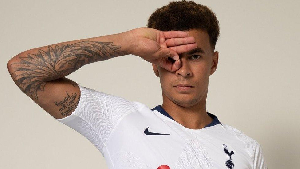
At Tottenham, Dele Alli didn’t arrive — he exploded.
Plucked from MK Dons, he stepped into the Premier League as if he had always belonged. Goals came naturally, instinctively. He ghosted into the box like Frank Lampard, struck with the authority of Steven Gerrard, and carried the swagger of a player who didn’t fear reputations.
By 21, his numbers were staggering. More goals than Lampard and Gerrard had at the same age. He nutmegged world-class players for fun. He scored twice against Real Madrid on a famous European night. England didn’t just have a star — they had their next great midfielder.
But football doesn’t always reward early brilliance.
The spark began to fade. Managers changed. Systems shifted. Confidence slipped. What once looked effortless started to look forced. Behind the scenes, personal struggles added layers the public didn’t fully understand at the time.
Dele Alli didn’t suddenly lose his talent. It just slowly stopped shining.
And that is the cruelest part — watching a player who once made everything look easy struggle to find himself again.
Adnan Januzaj – Old Trafford’s Fading Light
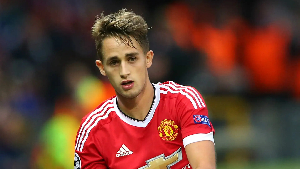
In 2013, Manchester United were searching for hope.
Then came Januzaj.
Slender, fearless, gliding across the pitch with the ball glued to his feet, he brought excitement back to Old Trafford.
His debut goals against Sunderland were moments of pure instinct — the kind that make fans sit forward and believe again.
The comparisons came quickly: the next Ryan Giggs.
It made sense. The dribbling, the balance, the confidence to take players on — Januzaj looked like a natural heir to United’s wing wizard. Even internationally, there was a tug-of-war for his allegiance. That’s how highly he was rated.
But timing is everything in football.
United were unstable. Managers came and went. The structure around him shifted constantly. Loans followed — Borussia Dortmund, Sunderland — each one promising a restart, none delivering it fully.
Januzaj didn’t disappear. He just drifted.
From “the future of Manchester United” to a player searching for consistency across Europe. Another name added to football’s long list of almosts.
Paulo Dybala – The Weight of Being Messi’s Heir
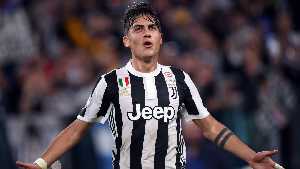
At Palermo, Dybala played like a secret waiting to be discovered. Quick feet, low centre of gravity, a left foot that could bend games to his will. They called him La Joya — the jewel.
When Juventus signed him, the secret became a spotlight.
Suddenly, he wasn’t just talented. He was the next Lionel Messi.
The comparisons were everywhere. Same nationality. Same left foot. Same grace in tight spaces. It was flattering — until it wasn’t.
Because how do you become Messi when Messi is still Messi?
Dybala had moments of brilliance. Champions League nights, league titles, decisive goals. On his own terms, he was exceptional. But the label followed him everywhere, turning greatness into something that always felt slightly incomplete.
Even his coach, Massimiliano Allegri, admitted those comparisons did more harm than good.
Dybala didn’t fail. But the expectations around him were impossible to satisfy.
Bojan Krkić – The Boy Who Carried Too Much
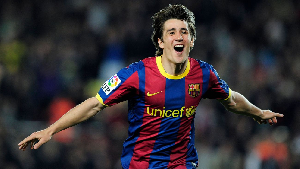
Before the world met the next generation of Barcelona wonderkids, there was Bojan.
At La Masia, he wasn’t just good — he was historic. He broke youth scoring records set by Messi. Coaches whispered about him with excitement. When he debuted for Barcelona at 17, it felt like the next chapter of greatness had already begun.
But something else arrived with him: pressure.
Heavy, suffocating pressure.
Bojan has since spoken openly about anxiety, about panic attacks, about the overwhelming weight of expectation at such a young age. On the pitch, the spark flickered. Off it, the burden grew.
His career became a journey — Roma, AC Milan, Stoke City — each move an attempt to rediscover himself away from the shadow of what he was supposed to be.
He didn’t fail because he lacked talent. He struggled because sometimes, talent isn’t enough to survive the storm around it.
Gerard Deulofeu – All the Tools, Not the Time
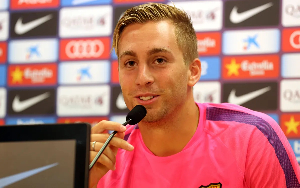
Deulofeu had everything you could want in a winger. Pace, flair, confidence, the ability to beat defenders with ease. At Barcelona, he was seen as the natural continuation of their attacking philosophy. Another “mini Messi.”
But football isn’t just about what you have — it’s about when and how you use it.
Loan spells showed glimpses. Everton, Sevilla — moments where he looked unstoppable. But consistency never followed. Decision-making lagged behind ability. And at Barcelona, patience is short when greatness is the standard.
Deulofeu didn’t collapse. He simply plateaued.
A player of highlights, not dominance.
Max Meyer – Germany’s Lost Midfield Future
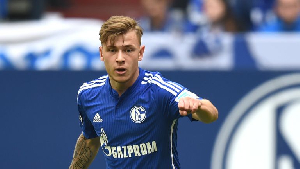
At Schalke, Max Meyer looked like the future.
Elegant on the ball, intelligent in movement, calm under pressure — he was everything modern midfield demanded. Germany labelled him the next Michael Ballack. Big clubs watched closely.
But when he made the move to the Premier League with Crystal Palace, something didn’t click. The tempo, the physicality, the system — it all felt off.
From there, the decline was quiet but steady. Short spells, lesser leagues, fading relevance.
From Germany’s next great hope to a name you had to search for.
Dembélé – The One Who Escaped
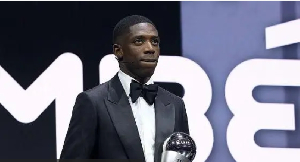
Dembélé was supposed to join them.
At Barcelona, he was the €105 million replacement for Neymar — explosive, unpredictable, but constantly injured. There were jokes about his fitness, doubts about his mentality, whispers that he would become another wasted talent.
He hovered on the edge of that same list — the list of what could have been.
But he refused to stay there.
He rebuilt. He endured the injuries. He refined his game. And at PSG, everything finally aligned — the talent, the consistency, the impact. Goals, assists, decisive moments on the biggest stage.
And now, the Ballon d’Or.
Conclusion – A Trophy for the Unfinished Stories
As Dembélé stood in Paris, holding football’s greatest individual prize, his story reached its peak.
But around that moment lingered others — unfinished stories, broken paths, careers that never reached this height.
Wilshere. Alli. Januzaj. Dybala. Bojan. Deulofeu. Meyer.
Different journeys. Same beginning.
Dembélé didn’t just win the Ballon d’Or. He escaped the fate that caught so many before him.
And in doing so, he gave every fallen wonderkid something they thought they had lost forever.
FKA/BAI
AROUND TOWN: Unstable power hits Teshie as residents question return of 'dumsor'
Sports News of Tuesday, 28 April 2026
Source: www.ghanaweb.com
Why Dembélé’s Ballon d’Or is for all young talents
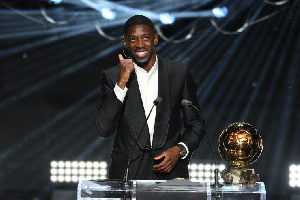 Ousmane Dembélé won the 2025 Ballon d'Or