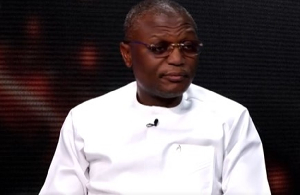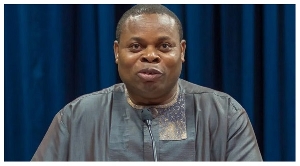
The President of IMANI Africa, Franklin Cudjoe, has urged Ghanaians to prioritise regular health check-ups, warning of the rising prevalence and high cost of managing neurological conditions such as Parkinson's disease.
Speaking in a recent interview on Starr Chat, he stressed the importance of early detection.
Franklin Cudjoe noted that symptoms of the disease may begin gradually, making routine medical examinations crucial, especially as people age.
'Folks, it is Parkinson's' - Franklin Cudjoe shares details of disease he's had for 8 years
"All those who go to do the normal health checks every year, at least once a year, try to check for it, as Parkinson's is attacking everybody," he remarked.
Cudjoe explained that Parkinson’s disease occurs when dopamine levels in the brain decline due to damage in specific regions responsible for movement and coordination.
This degeneration can lead to symptoms such as shaking, slowed movement, and difficulty performing everyday tasks, conditions that are sometimes wrongly mistaken for intoxication.
He explained how the disease affects his daily functioning, noting the time-bound effectiveness of his medication.
According to him, the effects of the medication wear off after a few hours, which requires careful management of his schedule and activities.
“I can drive within a four-hour window. I can do everything any normal person can do, but within a three to four hour window because I think in the fifth or the fourth hour, the medicine starts waning," he noted.
However, he revealed that these medications are expensive, with costs running as high as $60 to $100 every six days, depending on the combination required.
"What I use now is about $65 or $65, and that's for just about six days. For instance, if you add all that medication to what my Italian neurologist added, which is to protect the brain, you are heading towards close to maybe $80 or $90.
Cudjoe expressed concern about access to treatment, particularly for individuals without financial support systems.
He also called attention to broader neurological conditions, including Alzheimer's disease, warning that such illnesses are no longer confined to wealthy populations but are increasingly affecting people across all social classes due to changing lifestyles and environmental factors.
"Maybe I have support systems. But I worry because the people... It's an expensive disease.
"The Alzheimer's diseases are no longer diseases of the rich; they are now diseases of the poor because of the sort of lifestyles we are leading", he stated.
In addition, he raised an alarm over the limited number of neurologists in Ghana, estimating that the country has only about 14 to 15 specialists to serve the entire population.
This shortage, he said, contributes to delayed diagnoses and misinterpretation of symptoms.
"We don't have many neurologists. We have just 10 or 15 neurologists in the country. Neurology is an area where you even need to have paediatric neurologists
"So they are specialisations; these are just neurologists for everybody. I think they are just 14",' he said.
Cudjoe urged government authorities to prioritise investment in neurological healthcare, improve access to diagnosis and treatment, and increase specialist training.
“People should take their health seriously,” he added.
According to the World Health Organization (WHO), Parkinson's disease (PD) is a brain condition that causes problems with movement, mental health, sleep, pain, and other health issues.
There is no cure for the disease, but therapies, including medicines, surgery, and rehabilitation, can reduce symptoms.
See the video below:
I spend about $80 to $90 every six days on medication for Parkinson’s disease... - Franklin Cudjoe (CEO, IMANI Centre for Policy and Education) #StarrFM #StarrChat #GHOneTV #EIBNetwork #NewsAlert #GHOneNews pic.twitter.com/VMHiFuyL9K
— GHOne TV (@ghonetv) April 10, 2026
JKB/EB
Ex Black Stars player accuses family of 'stealing' his 8 bedroom house: