A growing concern about Ghana’s dependence on foreign aid is being brought back into focus, as Rev Dr Kwabena Opuni-Frimpong warns that the trend is quietly limiting the country’s ability to make firm, independent decisions.
The former General Secretary of the Christian Council of Ghana shared these concerns during an appearance on Dwaso Nsem on Adom FM, where he spoke candidly about how external influence is shaping national policies.
According to him, Ghana’s struggle to fully implement certain policies, including the LGBTQ Bill, cannot be separated from its reliance on international partners, particularly the European Union and the United States.
Drawing from personal experience, Rev Opuni-Frimpong revealed that even well-prepared projects are sometimes stalled at the final stage because they do not align with the policies of donor countries.
“Sometimes, after putting all project documents together, when it is time for funds to be released to commence work, donors, particularly from the European Union and the United States, decline support, citing conflicts with their domestic policies,” he said.
He explained that this reality cuts across sectors, with a significant portion of Ghana’s education and healthcare infrastructure still supported by foreign donors. While such partnerships have brought development, he believes they have also created a level of dependence that raises difficult questions about the country’s long-term autonomy.
For him, the issue is not just economic; it is about national confidence and direction. He questioned how long Ghana can continue to rely so heavily on external assistance without compromising its ability to act in its own interest.
To illustrate the risks, he pointed to a recent situation in neighbouring Burkina Faso, where a ban on tomato exports exposed Ghana’s vulnerability and sparked concern over its dependence on imports.
Rev Opuni-Frimpong also revisited the vision of “Ghana Beyond Aid,” describing it as a bold and necessary agenda that has yet to be fully realised. In his view, the country must move beyond rhetoric and take deliberate steps toward self-sufficiency.
He is therefore calling on leadership, particularly President John Dramani Mahama, to make tough but strategic decisions that will reduce reliance on foreign support and build a more resilient economy.
Ultimately, he believes the focus should be on policies that will stand the test of time, decisions that not only address immediate challenges but also secure a stronger, more independent future for Ghana.
NA/BAI
Dr Nyaho Nyaho-Tamakloe on Ghana's past, present and the road ahead
General News of Thursday, 2 April 2026
Source: www.ghanaweb.com
Foreign aid dependence undermining Ghana's decisions – Opuni-Frimpong
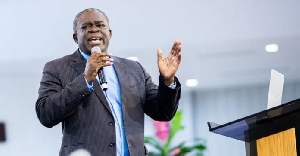 Rev Dr Kwabena Opuni-Frimpong is a Senior Lecturer at the Department of Religion and Human Developme