The departure of Otto Addo from the Black Stars dugout may appear, on the surface, like decisive action from the Ghana Football Association.
In reality, it is far less heroic. It is simply the federation confronting the consequences of a decision it made itself.
For months, pressure had been mounting around Addo’s tenure. Results faltered, performances raised questions, and confidence in the team’s direction eroded.
Yet the warning signs were there all along, from his appointment to the streaks that followed.
In January 2024, the GFA began its search for a new head coach. It presented clear criteria:
GFA sacks Otto Addo
A proven winner in men’s national team or club football.
A track record in team reconstruction and development of young talent.
Holding the highest coaching license with over 15 years of experience.
A disciplinarian, tactician, and leader.
These were high standards, signaling the federation’s intent to secure the most qualified candidate.
Yet despite this, Otto Addo was appointed.
His familiarity with the Black Stars setup and prior involvement in Ghanaian football outweighed the criteria and the federation defended its choice, confident that he was the right man for the job.
The reality of his second stint tells a mixed story: in 22 games, Addo recorded 8 wins, 5 draws, and 9 losses, scoring 35 goals and conceding 28, for a win rate of 36.4%.
He became the first Ghanaian coach to qualify the Black Stars for two consecutive World Cups, in Qatar 2022 and 2026, a feat many celebrated.
Yet there were glaring issues: in six AFCON 2025 qualifiers, he failed to register a single win, and Ghana missed out on the tournament for the first time in two decades.
Despite this, the GFA chose to stick with him.
The problem was clear: the signs were always there, but the federation refused to see them.
They knew sacking him earlier would be like undoing the appointment they always wanted to make.
Now, with the team heading to the 2026 World Cup, they finally decided to act. But the timing exposes the truth: this is not a corrective solution; it is damage control.
Sacking Otto Addo does not erase the failures.
It does not undo missed opportunities, poor performances, or the mismanagement that left Ghana struggling in critical qualifiers.
The problems that exist are structural and administrative, rooted in a decision that ignored red flags and overlooked the federation’s own standards when appointing him.
Fans should understand: this isn’t a heroic reset, it’s the GFA finally covering the mess they created.
The accountability lies with them, not with Otto Addo, who delivered historic qualifications under impossible pressure.
His exit is a symptom, not a solution.
In football, as in governance, timing is everything.
Correcting a mistake two years too late is not progress. It is merely admitting you got it wrong, and no one should be fooled into praising that.
Otto Addo’s exit does not erase the problems; it highlights them. The GFA is not heroically correcting course; it is covering the mess it created, and in doing so, taking responsibility for the consequences of a decision made two years ago.
Otto Addo did not appoint himself. The federation did. And now, they must live with the legacy of that choice.
FKA/JE
Meanwhile, watch the latest edition of Sports Check with Sports Minister Kofi Adams below:
Sports News of Tuesday, 31 March 2026
Source: www.ghanaweb.com
Why Otto Addo’s exit is not a solution but the GFA covering their own mess
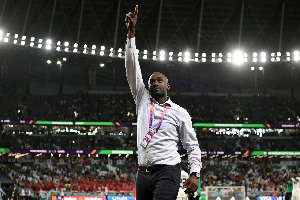 Otto Addo has been sacked as the head coach of the Black Stars