The Minister of Energy and Green Transition, John Abdulai Jinapor, has told Parliament that the government plans to eventually ban the importation of gas cylinders into Ghana as part of efforts to boost local production and strengthen the domestic LPG industry.
According to him, once the policy takes effect, companies operating in the sector will be required to source all cylinders and canisters from local manufacturers.
Speaking on the floor of Parliament, Jinapor explained that the government is currently working with the National Petroleum Authority and the Ghana National Gas Company to revive the struggling Ghana Cylinder Manufacturing Company Limited (GCMC), which has long been seen as a key player in the country’s LPG distribution chain.
“I can confirm that so far, estimates show that the company needs about $8 million to be able to revamp it, but we have been able to mobilise about $6 million for them,” he said.
Jinapor made the remarks while contributing to a statement by the National Democratic Congress Member of Parliament for Tano South, Charles Asiedu, who raised concerns about the urgent need to revitalise the company.
The energy minister said ongoing efforts to retool the factory have already begun to show results, noting that production has doubled in 2026, compared to 2024.
“I think we are on course to revamp Ghana Cylinder, and we are on course to retool it.
“Not only are we doing that, but we are giving them off-taker agreements and setting an escrow account,” he said.
As part of the government’s Cylinder Recirculation Model, Jinapor disclosed that he has directed that all old and obsolete cylinders be recalled so they can be refurbished by the company.
He also indicated that an agreement has been signed with Ghana Oil Company Limited (GOIL) to serve as an off-taker for the cylinders produced by GCMC.
“So, Mr Speaker, let me assure this House that we are on course towards retooling Ghana Cylinder and making it a modern factory fit for purpose,” Jinapor said.
Adding his voice to the debate, the Member of Parliament for Tano North, Charles Asiedu, proposed additional steps that could accelerate the recovery of the company.
He suggested that the state should inject targeted capital into GCMC to modernise its production lines, introduce advanced fabrication technologies and strengthen quality control systems.
Asiedu also recommended partnerships with private investors and LPG marketing companies to expand the company’s market reach.
“The government and public institutions should be encouraged to sell their LPG products and accessories from the company as a matter of policy,” he added.
He further argued that the company could benefit from opportunities under the African Continental Free Trade Area by exporting cylinders to neighbouring countries where demand for clean cooking solutions is growing.
Beyond industrial development, Asiedu stressed the importance of educating the public on the health and environmental benefits of LPG.
“Mr Speaker, let us remember that a stronger demand will sustain the operations of the company.
“Let us strengthen performance-based accountability mechanisms within all state-owned enterprises, including the GCMC, to ensure transparency and accountability,” he added.
According to him, wider adoption of LPG would help reduce the use of firewood and charcoal, protect Ghana’s forests, improve indoor air quality and lower greenhouse gas emissions.
He cited a 2023 industry report by the Ghana Chamber of Bulk Oil Distributors, which indicates that LPG currently serves as the primary cooking fuel for about 40 percent of Ghanaians.
The country has also set a target of achieving 50 percent LPG penetration by 2030.
Despite its strategic importance, Asiedu noted that GCMC has struggled financially in recent years.
An Auditor-General’s report showed that the company recorded a GH¢4 million loss in 2021, and in 2023, it was taken over by the Ghana National Gas Company to help keep it operational.
“Mr Speaker, even though this acquisition signals a step in the right direction, there is an urgent need for a broader and more coordinated national recovery plan.
“In this regard, the Ministry of Energy and Green Transition had announced earlier last year the establishment of a Joint Budget Implementation Committee to oversee a revitalisation plan,” he pointed out.
Asiedu concluded that a revitalised Ghana Cylinder Manufacturing Company could strengthen local industry, create jobs, increase access to LPG, and support the country’s climate goals, urging Parliament to back the revival efforts with urgency.
NA/AE
#TrendingGH: President Mahama's use of brother's jet sparks public debate
Business News of Saturday, 14 March 2026
Source: www.ghanaweb.com
Government plans to ban importation of gas cylinders – John Jinapor
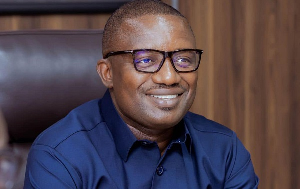 John Abdulai Jinapor is the Minister of Energy and Green Transition







Opinions