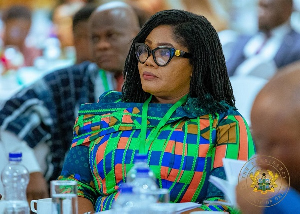
Ghana has reaffirmed its commitment to strengthening access to justice for women and girls through inclusive legal systems, stronger laws and expanded partnerships.
The Minister for Gender, Children and Social Protection, Dr Agnes Naa Momo Lartey, made the remarks during a ministerial roundtable discussion at the 70th session of the United Nations Commission on the Status of Women held at the United Nations Headquarters on Tuesday, March 10, 2026.
The roundtable focused on the theme “Ensuring and strengthening access to justice for all women and girls, including by promoting inclusive and equitable legal systems, eliminating discriminatory laws, policies and practices and addressing structural barriers.”
Addressing fellow ministers and global stakeholders, Dr Momo Lartey said Ghana considers access to justice both a constitutional duty and a critical development priority.
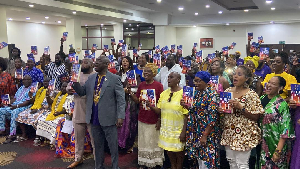
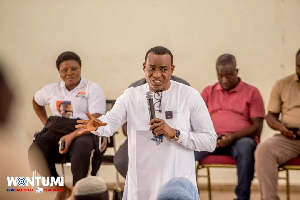
Gender Minister engages civil society, young women at UN Women's Conference
“In Ghana, access to justice is both a constitutional obligation and a development imperative,” she said, noting that the country’s efforts are guided by the principles of equality and non-discrimination enshrined in the 1992 Constitution of Ghana.
She added that Ghana’s policies are also informed by international commitments such as the Convention on the Elimination of All Forms of Discrimination against Women and the 2030 Agenda for Sustainable Development.
Despite progress, the minister acknowledged that many women and girls continue to face barriers when seeking justice.
“Limited awareness of legal rights, financial constraints and socio-cultural norms continue to discourage many women and girls from seeking justice, particularly in cases of violence and discrimination,” she said.
Dr Momo Lartey highlighted several legislative measures adopted by Ghana to strengthen protection for women and girls, including the Domestic Violence Act, the Human Trafficking Act and the Children’s Act.
These laws, she explained, are supported by institutional mechanisms such as the Domestic Violence and Victim Support Unit of the Ghana Police Service and the Legal Aid Commission, which provide assistance to survivors of abuse and other vulnerable groups.
She also stressed the importance of collaboration with civil society organisations and women’s rights groups in expanding access to justice at the grassroots level.
“Through legal literacy programmes, paralegal services, community advocacy and survivor support initiatives, these partnerships are helping to bridge gaps between formal justice systems and the communities they serve,” she said.
According to the minister, these collaborative efforts have contributed to key policy and legal reforms in Ghana, including the passage of the Affirmative Action (Gender Equity) Act, 2024 and the development of the National Gender Policy (2025–2034).
Dr Momo Lartey further emphasised the role of traditional authorities in ensuring justice at the community level, noting that Ghana continues to work closely with the National House of Chiefs and Queen Mothers to align customary dispute resolution systems with constitutional and international human rights standards.
She also indicated that Ghana is exploring the use of digital innovation to improve access to justice.
“Efforts are underway to strengthen digital case management systems, improve reporting mechanisms for gender-based violence and expand public access to justice services through technology,” she said, adding that authorities are also working to address emerging risks such as online harassment and technology-facilitated violence.
The minister reaffirmed Ghana’s commitment to strengthening its justice system to better serve women and girls.
“Ghana remains committed to strengthening laws, institutions and partnerships to ensure that justice systems are accessible, responsive and inclusive for all women and girls,” she said.
General News of Tuesday, 10 March 2026
Source: www.ghanaweb.com