In the days that preceded March 6, 1957, when the Gold Coast shed its colonial label and stood on the brink of independence, its leaders reached back into West Africa’s deep past to settle on the name “Ghana”.
The leaders picked “Ghana”, a single word, heavy with history, resonance and intent, not because the medieval empire occupied where modern Ghana is now located on the map, but because the name carried the authority and dignity the leaders of the then Gold Coast wanted to claim.
The choice was an act of imagination as much as politics. In a moment when symbols mattered as much as constitutions, naming the country Ghana was a deliberate reclaiming of African prestige.
It was a way to tell the world, and themselves, that the people of the Gold Coast were heirs to a tradition of statecraft, trade and leadership that predated European rule.
It was the refusal of the narrow, extractive identity implied by “Gold Coast” and an embrace of a broader, pan-African story.
The empire behind the name
The medieval Ghana, often called the Wagadou Empire, flourished between the 4th and 13th centuries in the western Sudan, in the region of today’s southeastern Mauritania and western Mali.
It was known across the Sahel for wealth, long distance trade in gold and salt, and centralised authority.
Over centuries, the name “Ghana” became shorthand across West Africa for rulership and power; in the Soninke language and it functioned as a royal title, commonly translated as “king” or “warrior king.”
The medieval polity’s geography did not overlap with the coastal territory of the Gold Coast but that mismatch did not trouble independence leaders.
What mattered was the symbolic freight the name carried; a remembered model of African sovereignty that could lend moral weight to a modern nation emerging from colonial rule.
Why Ghana
Choosing Ghana was not a casual decision. It was debated among intellectuals, nationalists and political figures who wanted a name that would resonate beyond the colony’s borders.
The new name signalled a break from the past and a claim to dignity. It was also a statement of aspiration.
The leaders wanted a country that would be seen as a dictating the pace in a newly decolonised Africa.
The renaming was therefore both inward-facing and outward-facing. Domestically, it helped forge a national narrative that could unite diverse ethnic groups under a single banner. Internationally, it positioned the new state within a lineage of African polities, asserting that modern nationhood could draw legitimacy from pre-colonial achievements.
What the name meant to people then
For ordinary citizens, the name Ghana offered a story to belong to. Schoolbooks, public ceremonies and diplomatic rhetoric all leaned on the symbolism.
The new nation’s leaders used the name to teach a history that emphasised continuity and resilience rather than rupture and loss.
In a region where colonial borders had split peoples and histories; the name Ghana provided a shared reference point that was at once proud.
At the same time, the choice of name invited confusion. Many assumed the medieval empire had occupied the same land as modern Ghana.
Historians and educators in the decades that followed had to clarify that the connection was symbolic, not territorial.
The legacy and modern resonance
More than six decades on, the name Ghana still anchors national identity, shapes diplomatic posture and features in the country’s cultural memory.
The symbolic link to a storied past has helped successive governments and civil society actors frame development and nation-building as part of a longer African story.
Yet the name also serves as a reminder of the limits of symbolism. Invoking the medieval Ghana does not erase the complexities of modern statehood; colonial legacies, ethnic diversity, economic challenges and regional geopolitics remain immediate realities.
Why the Ghana story matters now
Understanding why the Gold Coast became Ghana helps explain how nations use history to make claims about legitimacy and destiny.
It shows that naming is never neutral - it is a political act that shapes how citizens see themselves and how the world sees them.
For a newly independent state in 1957, choosing Ghana was a way to assert dignity, continuity and leadership, a choice that still echoes in the country’s institutions, ceremonies and public imagination.
Note that the name Ghana offers inspiration, not a blueprint.
VKB/VPO
Rev Dr Ebenezer Conduah arrested and remanded into custody
General News of Monday, 9 March 2026
Source: www.ghanaweb.com
Sankofa Series: The link between old Ghana Empire and how Ghana got its name
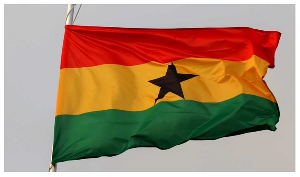 File photo of the flag of Ghana