Global oil prices rose above $100 per barrel on Sunday after major energy producers in the Middle East cut production amid escalating tensions in the ongoing Iran-Israel war.
The move follows the effective closure of the Strait of Hormuz, one of the world’s most critical routes for oil and gas shipments, due to the growing US-Israel-Iran Conflict.
Benchmark Brent Crude Oil jumped 18% to $108.68 per barrel, while West Texas Intermediate rose nearly 20% to $108 per barrel.
Oil prices hit $90 per barrel as Israel-Iran war escalates
The increase marks the largest price jump since the Russian Invasion of Ukraine, when crude prices soared well above the $100 mark.
Market anxiety had already been building last week. However, sentiment quickly turned into outright panic after reports that major oil producers Kuwait and the United Arab Emirates had begun trimming output as storage facilities filled rapidly following the closure of the Strait of Hormuz.
Another major producer, Iraq, had started cutting production days earlier.
Prices later stabilised in early Monday trading after reports that Group of Seven ministers and the International Energy Agency were set to discuss a coordinated release of emergency oil reserves in an effort to calm markets.
Since the start of the conflict with Iran, the $100-per-barrel level has been widely viewed by analysts as a psychologically significant threshold that could trigger global inflationary pressures and volatility in financial markets.
Potential impact on Ghana
For Ghana, the sharp rise in global oil prices could have mixed economic effects.
On one hand, higher crude prices may increase government revenue from petroleum exports, particularly from the Jubilee Oil Field and the TEN Oil Field.
However, the downside could be significant as Ghana imports large volumes of refined petroleum products, meaning higher global oil prices could lead to:
• Increased fuel prices at the pump
• Higher transportation costs
• Rising inflation, especially for food and essential goods
• Additional pressure on the cedi and government subsidies
The development could also strain households and businesses if global oil prices remain above $100 per barrel for an extended period.
SP/MA
Auto dealers respond to 15% price cut announcement
Business News of Monday, 9 March 2026
Source: www.ghanaweb.com
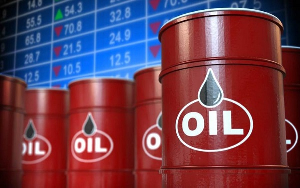
Crude oil price hits $108 per barrel
 The move follows the effective closure of the Strait of Hormuz