A new study conducted by the Institute of Statistical, Social and Economic Research (ISSER) at the University of Ghana has called for a hybrid waste management framework that combines decentralised local systems with large-scale private sector participation to improve efficiency, attract capital, introduce technology, and unlock long-term value in Ghana’s sanitation sector.
The report, titled “An Economic Analysis of the Benefits of Adequate Investment in Waste Management and Sanitation in Ghana,” argues that while empowering Metropolitan, Municipal and District Assemblies (MMDAs) remains critical, structural transformation of the sector requires the participation of large industry players capable of injecting substantial capital and technical expertise beyond the capacity of most local authorities.
Presenting the findings in Accra on Thursday, February 26, 2026, Lead Researcher and Economist at the University of Ghana, Professor Peter Quartey, said decentralisation provides institutional proximity and accountability but does not necessarily deliver the scale required for infrastructure-intensive investments.
“Our assemblies are closest to the problem. They understand the local dynamics of waste generation and collection,” Professor Quartey noted. “However, building modern material recovery facilities, large composting plants, or waste-to-energy installations requires financial depth and engineering capacity that most MMDAs simply do not possess. A strategic partnership model is therefore essential.”
The study highlights a significant mismatch between sector needs and current expenditure. Ghana’s 261 MMDAs collectively spend about GHS 180 million annually on waste management and sanitation—an amount the report describes as inadequate relative to the scale of the problem and the economic opportunities within the waste value chain.
ISSER estimates that inadequate sanitation costs Ghana’s economy more than GHS 6.2 billion annually through healthcare expenses and productivity losses. Researchers argue that incremental improvements within existing budget limits will not deliver systemic change.
The report proposes a two-tier financing model. At the metropolitan level, where waste volumes create economies of scale, public-private partnerships (PPPs) could attract investment into high-capacity recycling facilities, engineered landfills, and waste-to-energy plants.
At the local level, targeted public investment should prioritise waste collection systems, safe disposal sites, drainage rehabilitation, and the elimination of open dumping.
Data presented in the study revealed disparities across jurisdictions. Metropolitan assemblies such as Accra and Tema spend significantly more per capita on waste management than smaller municipal and district assemblies.
However, smaller assemblies often face higher vulnerability to sanitation-related diseases due to limited infrastructure, weak drainage systems, and rapid peri-urban expansion.
Co-author Dr Kwame Adjei-Mantey cautioned that uniform policy approaches could deepen inequality.
“Large cities can attract private operators because they offer scale and predictable revenue streams,” he said. “Smaller districts require deliberate fiscal support to build foundational systems. Without that balance, investment will concentrate in commercially attractive areas while high-burden communities remain underserved.”
The report identifies fast-growing municipal assemblies as critical intervention points, noting that they shoulder significant waste-related expenditure while lacking the scale to finance advanced processing infrastructure independently.
Researchers also highlighted the technical potential for Ghana’s municipal solid waste to generate up to 1,484 megawatts of electricity under an optimised waste-to-energy framework.
Professor Ebo Turkson, a member of the research team, said such projects require industrial-scale financing and operational expertise that decentralised local systems alone cannot provide.
“Waste-to-energy plants, advanced sorting facilities, and integrated composting systems are capital-intensive undertakings,” he noted. “Private firms with sector experience can deliver operational efficiency and technological innovation, provided regulatory clarity and bankable project structures are in place.”
However, the study cautions that private participation must operate within strong regulatory and contractual frameworks to protect public interest and environmental standards.
While endorsing private sector involvement, the report emphasises that MMDAs must evolve into effective regulators and contract managers by strengthening procurement systems, performance monitoring, data collection, and enforcement mechanisms.
Dr Ralph Armah stressed that decentralisation should not mean reduced oversight.
“Local assemblies must become intelligent clients capable of negotiating balanced agreements and ensuring service quality,” he said. “Institutional strengthening is as important as capital mobilisation.”
The report also calls for structured integration of informal waste collectors into formal systems, arguing that inclusive policies could improve efficiency while enhancing occupational safety, income stability, and training opportunities.
The study concludes that Ghana requires a coordinated national waste management strategy that clearly defines responsibilities among central government, MMDAs, and private sector operators. Policy predictability, transparent tariff systems, and enforceable environmental standards were identified as essential for sustainable investment.
Professor Quartey described the current moment as a strategic inflection point.
“Decentralisation remains essential, but it cannot succeed without capital and technology injections from strategic private sector players,” he said. “If empowered local governance aligns with credible private sector participation, Ghana can transform waste from a fiscal burden into a productive economic sector.”
Business News of Thursday, 26 February 2026
Source: www.ghanaweb.com
Ghana needs private sector investment to fix waste crisis - ISSER report
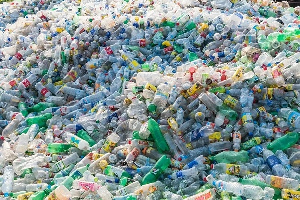 File photo of waste