A new study by the Institute of Statistical, Social and Economic Research (ISSER) has shown that Ghana’s informal waste sector, which has been largely overlooked and unregulated, could generate billions of cedis annually if properly structured and supported.
The study, titled “An Economic Analysis of the Benefits of Adequate Investment in Waste Management and Sanitation in Ghana,” projects that with sustained investment and the formal integration of informal waste actors, popularly known as “aboboyaa operators” the country could realise up to GH¢47.9 billion in annual economic benefits by 2032.
The researchers argue that waste management should no longer be viewed solely as a sanitation challenge but as a strategic economic sector capable of driving job creation, improving public health, and contributing to energy production.
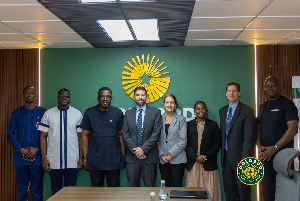
Presenting the findings at a policy dialogue in Accra, the Director of ISSER, Professor Peter Quartey said the economic logic is compelling.
“We have treated waste as a liability for decades. The evidence now shows it is a high-value economic resource. If we invest deliberately and bring informal operators into a structured system, this sector can generate billions annually for the Ghanaian economy,” he said.
ISSER calls for tougher measures to deliver growth, jobs targets
The report estimates that Ghana currently loses more than GH¢6.2 billion each year due to inadequate sanitation and waste management systems.
These losses stem largely from healthcare costs associated with preventable diseases such as malaria, cholera, and pneumonia, as well as productivity losses from illness-related absenteeism.
According to the study, sanitation-related diseases contribute to over 107,000 premature deaths annually and account for nearly 32 million lost work and school days.
ISSER’s modelling contrasts this “business-as-usual” scenario with a higher-investment approach aligned with lower-middle-income country benchmarks.
Under this scenario, which proposes spending approximately GH¢1,028 per tonne of waste managed, projected benefits would significantly outweigh costs.
The researchers estimate that every cedi invested at scale could generate returns of up to GH¢556 through reduced healthcare expenditure, increased labour productivity, and expanded recycling and energy value chains.
A major focus of the study is the contribution of informal waste workers—including tricycle (aboboyaa) operators, scrap dealers, and community recyclers who currently form the backbone of waste collection and material recovery in many urban areas.
The study recommends targeted capital investments in high-risk urban and peri-urban communities, expanded recycling infrastructure, incentives for private sector participation, and structured financial and social protection schemes for informal waste workers.
The researchers conclude that with political will, regulatory reform, and sustained financing, Ghana’s informal waste economy could evolve into a multi-billion-cedi growth engine, transforming a long-standing sanitation burden into a national asset.
SP/MA
Auto dealers respond to 15% price cut announcement
Business News of Thursday, 26 February 2026
Source: www.ghanaweb.com
Ghana's informal waste economy could generate billions annually - ISSER report
 Professor Peter Quartey is the Director of ISSER