A local fabricators’ post-harvest equipment programme by the United Nations World Food Programme (WFP) has been inaugurated at the Technology Solution Centre in Savelugu in the Northern Region to address persistent challenges in Ghana’s food systems, particularly post-harvest losses.
The programme, implemented in partnership with the GRATIS Foundation, seeks to strengthen local fabrication, enhance skills development and promote local ownership, while addressing food security holistically — from production and harvesting to processing, storage and access to markets.
Under the initiative, 231 young Ghanaian artisan-fabricators are being trained and deployed to produce high-quality threshing equipment under supervised quality assurance mechanisms.
In line with agreed targets, the artisans are fabricating 300 threshers — comprising 200 maize and 100 soybean units — to be installed at selected agribusiness sites serving women and youth smallholder farmers. Once fully operational, the initiative is expected to directly benefit more than 3,000 farmers by improving productivity, reducing drudgery and preserving the value of their harvests.
Dubbed “Local Fabrication for Food Systems Transformation: Reducing Post-Harvest Losses through Youth Skills and Mechanisation”, the programme is supported by the Mastercard Foundation and is being implemented across seven Technology Solution Centres: Hohoe, Dormaa, Savelugu, Konongo, Kumawu, Bolgatanga and Techiman.
Minister for Food and Agriculture Eric Opoku said government had invested heavily in increasing agricultural production, yet continued to lose a significant proportion of farmers’ harvests due to inadequate post-harvest handling.
He noted that poor post-harvest management had been robbing farmers of income and undermining efforts to strengthen the food system, adding that the programme would help address the challenge.
“By linking mechanisation, local manufacturing and skills development, this initiative demonstrates a commitment to building the capacity of local artisans for agricultural transformation while reducing food and equipment imports,” he said.
Deputy Minister for Trade, Agribusiness and Industry, Samson Ahi, said the initiative not only addresses post-harvest losses but also creates opportunities for local entrepreneurs and artisans to contribute meaningfully to the agricultural transformation agenda.
He described the programme as a beacon of hope for smallholder farmers and agro-processors, and reaffirmed the Ministry’s commitment to supporting initiatives that build a better future for the country.
He also commended WFP and its partners for building the capacity of young people and assured them of government’s support for local industrial growth.
The Municipal Chief Executive for Savelugu, Alhassan Fuseini, said the use of local workshops would enhance skills transfer and stimulate local economic activity.
He added that improved access to mechanised threshing services would reduce post-harvest losses, increase farm productivity and enhance farmers’ incomes.
“This initiative aligns with government priorities on industrialisation, youth employment, agribusiness development, food security and value addition, demonstrating how policy vision can be translated into practical, community-level outcomes,” he said.
Business News of Sunday, 15 February 2026
Source: thebftonline.com
WFP local fabricators post-harvest equipment programme inaugurated
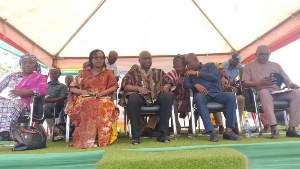 231 young Ghanaian artisan-fabricators are being trained by the programme




Entertainment