Stakeholders at a Green Africa Youth Organization (GAYO) forum have called on governments, communities, the private sector and development partners to adopt zero waste systems that prioritize waste reduction at the source while ensuring a just transition that protects livelihoods.
The call was made during a webinar hosted by Green Africa Youth Organization (GAYO) as part of activities marking International Zero Waste Month.
Participants at the forum included environmental NGOs, youth-led organizations, civil society groups, policymakers, waste management professionals, informal waste workers, researchers, academic institutions, private sector actors and development partners among others.
The efforts by GAYO forms part of a global movement examining the growing use of false solutions in waste management, while promoting circular systems grounded in reduction, reuse, repair and composting.
Addressing participants, Zero Waste Director of GAYO Jacob Johnson Attakpah, said that Zero Waste goes beyond recycling and requires a complete redesign of production and consumption systems.
He noted that reducing waste at the source is the first and critical step, stating that recycling should only be considered after all other options such as reduction, reuse, repair and composting among others have been exhausted.
Attakpah explained that a just transition ensures that no one is left behind during system transformation, particularly those currently working within or dependent on existing waste management systems describing it as a ‘people-centred’ approach to waste management reform.
He mentioned that the four key pillars of a just transition include recognizing informal waste workers, community actors, protecting livelihoods while improving working conditions while ensuring that the benefits are shared equitably
“You cannot have a zero waste system without waste pickers. Their work plays a critical role in keeping cities and communities clean while preventing waste from entering landfills and incinerators. Policies must safeguard their livelihoods and dignity while improving occupational health and safety conditions,” Attakpah added.
International Zero Waste Month, observed globally in January, is organized by the Global Alliance for Incinerator Alternatives (GAIA) and its partners. The initiative seeks to amplify the voices of waste workers, grassroots movements, and local leaders building regenerative systems, while celebrating community-led zero waste initiatives worldwide.
The webinar series hosted by GAYO was expected to deepen public and institutional understanding of International Zero Waste Month and its global relevance, raise awareness about false solutions and their risks, and strengthen advocacy for zero waste practices and policies.
The series is also expected to elevate African and Global South perspectives in the global zero waste discourse and contribute insights to the Global Zero Waste Feature Marathon.
The Chief of Staff of GAYO, Nana Minta Asiedu Ampadu-Minta, said advocating for zero waste will help countries to redesign their disposables in a sustainable way to help build resilient cities.
According to him, the world is currently in a race between real solutions that rapidly reduce waste and false solutions that lock communities into costly and risky infrastructure for decades.
Ampadu-Minta who is also an environmental science, systems change, and policy expert observed that Africa and the broader Global South are often portrayed as the endpoint of global consumption, yet they remain at the frontline of climate vulnerability, public health impacts, and grassroots innovation in reuse, repair and refill systems.
He indicated that many circular practices in African communities are long-standing traditions that deserve greater investment, protection, and recognition.
Manager of Eco Clubs Africa at GAYO, Patrick Abbeyquaye further noted that policies and laws alone would have limited impact if citizens were unwilling to change their daily habits and therefore encouraged individuals to reduce plastic use, adopt reusable items such as water bottles and shopping bags, and practice waste reduction at the household level.
Abbeyquaye further mentioned that behavioral change begins with individuals and urged participants to see themselves as actors, advocates and change-makers within their communities, noting that visible action inspires others to adopt more sustainable practices.
The webinar series was held under the global theme, “Mobilizing Resources to Support Action and Accelerate Impact,” with a specific focus on “Just Transition, Policy, and Action Pathways for Zero Waste.”
This focus underscores the need for coordinated efforts, adequate investment, and inclusive policies to effectively scale up zero waste initiatives across Africa.
General News of Thursday, 5 February 2026
Source: ebenezer k. amponsah, contributor
Stakeholders call for zero-waste systems
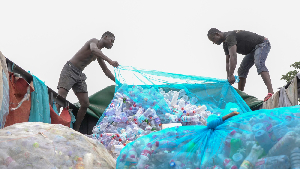 The call was made during a webinar hosted by Green Africa Youth Organization