Lieutenant-General Emmanuel Kwasi Kotoka (September 26, 1926 – April 17, 1967) was a senior Ghanaian military officer and a central figure in the coup d’état that overthrew the government of President Kwame Nkrumah on February 24, 1966, bringing Ghana’s First Republic to an end.
He later became a member of the ruling National Liberation Council (NLC) and served as General Officer Commanding the Ghana Armed Forces.
Kotoka was born at Alakple, near Keta, in the Volta Region of the then Gold Coast.
He received his early education at the Alakple Roman Catholic School and later attended Anloga Senior School, completing his studies in 1941.
Initially trained as a Catholic teacher-catechist, he taught briefly before turning to goldsmithing, qualifying in January 1947. Financial constraints, however, forced him to abandon the trade.
On 18 July 1947, Kotoka enlisted as a private in the Gold Coast Regiment at the Infantry School in Teshie, Accra.
His rise through the ranks was rapid: he became a sergeant in 1948 and Company Sergeant Major by 1951.
In 1952, he was selected alongside other West African soldiers, including A K Ocran, for officer training at Eaton Hall Officer Cadet School in Chester, England.
He was commissioned as a lieutenant in November 1954 and seconded to the British Army of the Rhine.
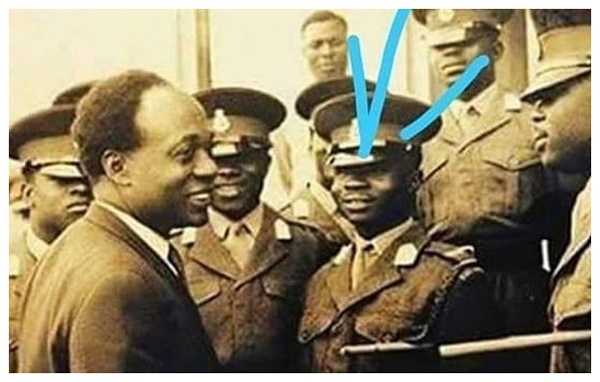
Returning to the Gold Coast in 1955, Kotoka was appointed Platoon Commander of the Second Gold Coast Regiment of Infantry.
He became second-in-command in 1958 and, in 1959, rose to Company Commander with the rank of captain and the temporary rank of major.
In 1960, he attended the Company Commanders’ Course at the School of Infantry in Warminster, England.
Later in 1960, Kotoka was deployed to the Congo-Leopoldville (now the Democratic Republic of the Congo) as part of Ghana’s contingent to the United Nations Operation in the Congo.
Commanding D Company of the Second Battalion, he was responsible for guarding strategic installations, including the radio station in Leopoldville (Kinshasa), during the intense political struggle between Prime Minister Patrice Lumumba and President Joseph Kasavubu.
His leadership, bravery, and tact under extremely difficult conditions earned him national acclaim.
He served two tours in the Congo and was promoted to major after his second deployment.
In 1962, Kotoka was sent to Katanga Province, where secessionist forces under Moïse Tshombe were resisting central authority.
He distinguished himself during operations at the Kamina military air base, an achievement that earned him the Ghana Service Order for Exceptional Bravery in 1963.
Upon his return to Ghana, Kotoka assumed the position of Quartermaster-General of the Ghana Army and later became Commander of the Second Infantry Brigade (now the Northern Command) based in Kumasi.
During this period, tensions rose within the armed forces following the creation of the Soviet-trained President’s Own Guard Regiment after the 1962 Kulungugu bomb attempt on President Nkrumah.

Kotoka opposed efforts to expand the Guard into a field regiment, viewing it as a violation of professional military norms and a threat to the army’s neutrality.
Convinced that the military was being politicised, Kotoka became involved in coup plotting alongside other officers, including Major Akwasi Amankwa Afrifa, Colonel A K Ocran, and Police Commissioner J W K Harlley.
After earlier efforts failed due to lack of senior-level support, Kotoka relied increasingly on junior officers. Using military preparedness exercises as cover, the conspirators finalised plans for the coup, codenamed “Operation Cold Chop”, to coincide with Nkrumah’s absence from the country on a peace mission to Asia.
The coup was launched successfully in the early hours of February 24, 1966. Kotoka went to Broadcasting House and announced the overthrow of the government, the dismissal of President Nkrumah, and the suspension of the constitution.
Fighting occurred at Flagstaff House, but by midday the President’s Guard had surrendered. The coup was widely welcomed by sections of the public.
An eight-member National Liberation Council assumed power, with Kotoka as one of its most prominent figures.
He was promoted to Major-General (later styled Lieutenant-General) and appointed General Officer Commanding the Ghana Armed Forces, as well as Commissioner for Health.
Though briefly involved in civilian administration, Kotoka focused mainly on reorganising the armed forces and sought to root out corruption and prevent former Convention People’s Party leaders from returning to power.
On April 17, 1967, an abortive counter-coup by junior officers — codenamed “Guitar-Boy” — was launched. Fighting broke out around Accra Airport, where Kotoka was captured and killed by Lieutenant Moses Yeboah.
The coup attempt failed, and its leaders were later tried and executed by a military tribunal.
Kotoka’s death plunged the nation into mourning.
A public trust fund was opened in his honour and was heavily subscribed.
When Ghana’s international airport was officially opened in 1969, it was renamed Kotoka International Airport, and a statue was erected at the exact spot where he fell—cementing his legacy as one of the most consequential and controversial figures in Ghana’s political and military history.
General News of Thursday, 5 February 2026
Source: www.ghanaweb.com
Who exactly was Lieutenant-General Emmanuel Kotoka?
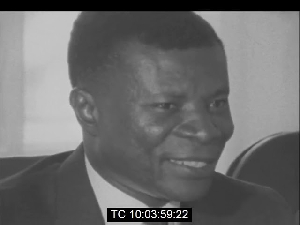 Lt Gen Kotoka was central to the coup that toppled Nkrumah's government