Long before streaming platforms, nightclubs with flashing LEDs, social media, and “pull-up” WhatsApp invites, entertainment in Ghana had a rhythm of its own; slow, soulful, and proudly communal, rooted in live music, cinema, and carefully planned community gatherings.
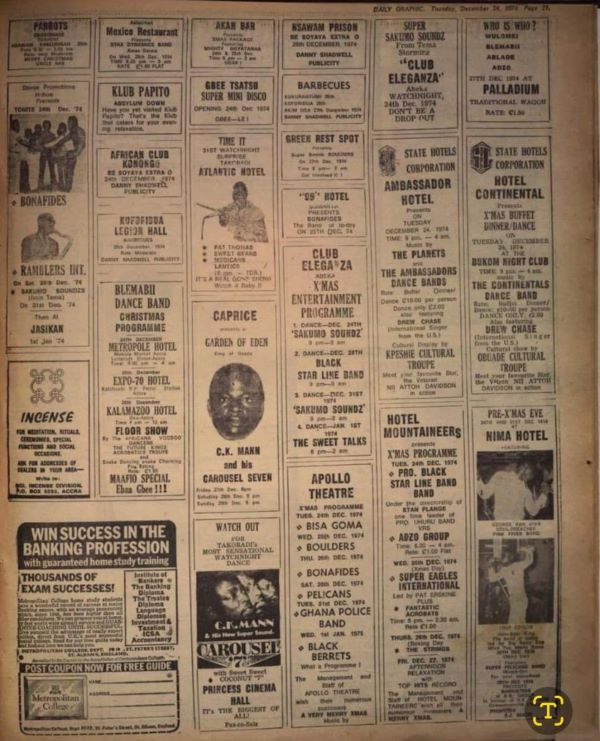
A glance at old newspaper pages from the 1970s, filled with entertainment advertisements, reveals a vibrant nightlife culture dominated by dance bands, cinemas, clubs, and hotel programs that defined how parents and grandparents relaxed after long workweeks.
Back then, fun was planned days in advance, and live band performances were at the heart of leisure. Popular venues such as Club Eleganza, Bonafides, African Club Konongo, and Caprice – Garden of Eden regularly hosted shows featuring top highlife and soul bands of the era.
Groups like C.K. Mann and the Carousel Seven, The Sweet Talks, Black Star Line Band, The Ambassadors Dance Band, and The Continental Dance Band were major crowd pullers, often attracting patrons from far beyond their host towns.
A night out was an event as people dressed formally, arrived early, and stayed late, often dancing until the early hours of the morning.
From Foreign Hands to Local Control: All about Ghana's 1970 business ownership law
Cinemas also played a significant role in social life. Prince’s Cinema Hall and Apollo Theatre were popular destinations where families, couples, and friends gathered to watch films together.
Movie outings were also communal experiences, often followed by lively discussions on the way home.
Hotels doubled as entertainment centres, especially during festive seasons. Venues such as Ambassador Hotel, Hotel Continental, Nima Hotel, and Hotel Mountaineers advertised Christmas programs, dance nights, and live band performances. These spaces became focal points for celebration during the holidays, with events like “X’MAS ENTERTAINMENT PROGRAMME” and “PRE-XMAS EVE” prominently promoted.
Enjoyment was deliberate in those days. Unlike today’s fast-paced nightlife, having fun was largely about physical presence and genuine social interaction.
People met face to face, shared drinks, danced together, and built lasting relationships. Entertainment was lived, not consumed through screens.
These archived advertisements offer more than nostalgia; they provide insight into a time when Ghana’s social life revolved around music, culture, and community.
How Ghanaians had to walk to Accra central to make a phone call in the 1970s - Prof Quaynor details
As modern entertainment continues to evolve, the olden days stand as a reminder of a slower, more connected way of unwinding, one that many believe defined an era of authentic social living.
See the newspaper clippings from the 1970's below:
MAG/MA
Meanwhile watch highlights of Black Sherif's performance at Zaama Disco 2025
General News of Wednesday, 24 December 2025
Source: www.ghanaweb.com
'Nsawam Prison, Klub Papito': How parents used to chill back in the day
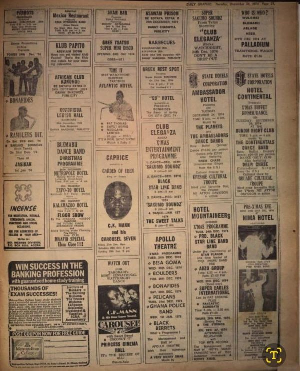 An old newspaper clipping from the 1970's advertising some entertaining events