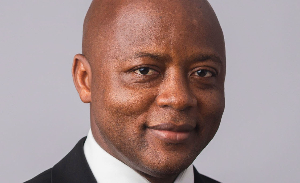
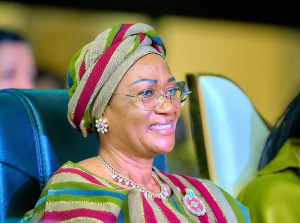
Second Deputy Governor of the Bank of Ghana (BoG), Matilda Asante-Asiedu, has issued a strong call for enhanced collaboration among law enforcement, regulators, banks, telcos and the media to tackle the growing threat of unlicensed financial operators.
Speaking at a workshop for the Technical Committee of the Committee for Cooperation Between Law Enforcement Agencies and the Banking Community (COCLAB) in Accra on December 18, 2025, Asante-Asiedu highlighted how Ghana’s digital financial boom has also created opportunities for illicit actors who are eroding public trust and undermining financial integrity.
According to the deputy governor, despite strong macroeconomic indicators, including 5.5% growth, inflation at 6.3%, and record consumer confidence, “periods of recovery also attract bad actors.”
She revealed that the BoG received over 50 complaints in 2024 alone related to unregulated savings, investment, and lending schemes.
Many of these entities use mobile money platforms and social media to offer deceptive loans with “punitive terms, abusive recovery practices, and data-privacy violations.”
“In 2024 alone, the Bank of Ghana received over 50 complaints related to unregulated savings, investment and lending schemes.
“These entities often mimic legitimate financial products while imposing exorbitant charges and engaging in abusive practices that erode public confidence,” she said.
To address this, Asante-Asiedu urged COCLAB to form structured multi-agency working groups to analyze the methods of these illegal operators and recommend joint enforcement actions.
“To strengthen our collective efforts, I encourage COCLAB to consider establishing structured multi-agency working groups to analyse the modus operandi of these illicit actors and recommend joint enforcement and preventive measures.
“Elevating selected COCLAB engagements to the heads of institutions’ level would also help ensure implementation and accountability,” she added.
She insisted that this is critical as Ghana is set to undergo its third-round Mutual Evaluation by the Inter-Governmental Action Group Against Money Laundering in West Africa (GIABA) in early 2026.
She explained that effective inter-agency cooperation will be essential to demonstrate compliance with international anti-money laundering and counter-terrorist financing standards.
“Collaboration must move beyond dialogue to execution. Only a unified and sustained approach will preserve confidence in our financial system.”
The workshop, held under the theme “Promoting Financial Integrity through Multi-Stakeholder Collaboration,” brought together representatives from the Judicial Service, Ghana Association of Banks, Economic and Organised Crime Office (EOCO), Cyber Security Authority, and other regulatory bodies.
ID/AM
Business News of Thursday, 18 December 2025
Source: www.ghanaweb.com
BoG Deputy Governor calls for a united front against unlicensed financial entities
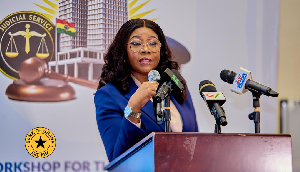 Second Deputy Governor of the Bank of Ghana (BoG), Matilda Asante-Asiedu