Restrictions on local rubber exports, as announced by the Minister of Finance in the 2026 budget, will save the country more than $127 million annually, industry players have said.
According to them, the restrictions, in addition to other measures, when fully implemented, would not only save foreign exchange but also create jobs for youth across the country, especially in rubber-growing areas.
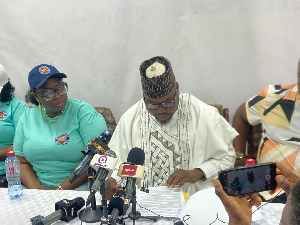
Both the Association of Natural Rubber Actors Ghana (ANRAG), the umbrella association of all value chain associations in the rubber industry, and the Rubber Processors Association of Ghana (RUPAG) told The Ghanaian Times in an interview that the initiatives outlined in the budget demonstrate strong alignment between government policy and longstanding industry advocacy.
They observed that this alignment presents a significant opportunity to develop a resilient, high-value, and globally competitive rubber industry.
In the budget presented to Parliament, the government announced several strategic measures to revitalise the rubber value chain and accelerate industrial transformation.
Central among these is the restriction on raw rubber exports, a policy designed to secure raw materials for local processors, boost value addition, and increase foreign-exchange earnings.
ANRAG maintains that restricting raw-rubber exports will safeguard local processing plants, preserve thousands of jobs, and significantly improve the country's foreign-exchange position.
ANRAG President Emmanuel Akwasi Owusu described the government's decision as visionary and timely, stressing that domestic processing offers far greater economic benefits than exporting raw materials.
He explained that while raw rubber earns about $600 per tonne, processed rubber fetches nearly $1,500 per tonne on the international market. This value gap represents income that should remain in Ghana to support employment and expand industrial capacity, he said.
Owusu projected that if all raw rubber were processed locally, Ghana could earn an average of $184 million annually over the next five years compared to the current average of $56 million, a threefold increase.
He cited Côte d'Ivoire as an illustrative example of the potential impact of the policy. Following the implementation of comparable export restrictions, the neighbouring country achieved revenue exceeding $2.1 billion from rubber in the previous year.
RUPAG General Secretary Perry Acheampong also welcomed the policy shift, describing it as bold, timely, and fully aligned with the sector's growth trajectory.
He emphasised that value addition is the foundation of sustainable industrial development; however, for almost a decade, Ghanaian processors have faced challenges in operating at full capacity due to uncontrolled raw-rubber exports.
According to Acheampong, restricting raw-material exports under the Feed the Industry Programme will ensure a stable supply of raw materials and strengthen Ghana's competitiveness in the global value chain.
Both ANRAG and RUPAG expressed confidence that with consistent implementation, the new policy framework will position the rubber industry as one of Ghana's strongest non-traditional export sectors and a key driver of inclusive industrialisation.
Business News of Tuesday, 25 November 2025
Source: ghanaiantimes.com.gh
Ghana to save over $127 million annually from restrictions on raw rubber export
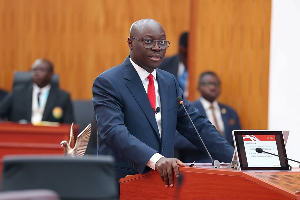 Minister of Finance, Dr Cassiel Ato Forson