The Deputy Minister of Works, Housing and Water Resources, Gizella Tetteh-Agbotui, has called on stakeholders to rally behind a new paradigm of sustainable and inclusive infrastructure development to drive national and regional growth.
She made this known during the 2025 International Building-Infrastructure & Investment Expo (IBIXPO 2025).
Speaking at the conference, the deputy minister called for a rethink of how infrastructure is planned, financed, and delivered; emphasising the need to prioritise sustainability, inclusivity, and resilience.
She also added that resilient and sustainable infrastructure, accountable financing, and public-private partnerships are key to bridging Ghana’s infrastructure gaps and driving national and regional growth.
Meet the Tetteh Sisters: The female 'dynasty' in Ghana's politics
“At the Ministry of Works, Housing and Water Resources, we are guided by this vision. Our work spans affordable housing, resilient water supply systems, flood mitigation, and urban regeneration. In each of these areas, we are committed to delivering projects that are not only cost-effective and efficient but also climate-resilient and socially inclusive. Our approach underscores the fact that the true measure of infrastructure success lies not simply in what we build, but in how we build,” she said.
Tetteh-Agbotui noted that collaborative efforts is required to achieve the vision of resilient infrastructure that powers economic transformation, strengthens communities, and safeguards the environment for future generations.
She, thus, urged policymakers, private sector actors, development partners, and civil society to work together in reshaping the infrastructure landscape of Ghana and the wider region.
For his part, the COO of Image Consortium, Albert Mensah, underscored the event’s objectives of bridging knowledge gaps, fostering partnerships, and unlocking investment opportunities in infrastructure.
“The theme for this year’s IBIXPO…is not just a slogan. It is a call to action. A call to rethink how we design, build, and sustain the systems that power our economies and connect our communities. Resilient infrastructure goes beyond concrete and steel, it is about creating networks and frameworks that withstand the test of time, unlock opportunities, and drive inclusive development for generations to come," he said.
SP/AE
Watch the latest edition of BizTech below:
Business News of Tuesday, 16 September 2025
Source: www.ghanaweb.com
Sustainability must guide Ghana's infrastructure development - Deputy housing minister
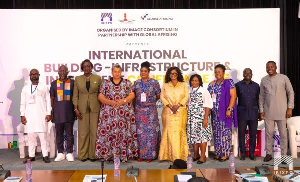 Gizella Tetteh-Agbotui pictured with stakeholders at the 2025 IBIXPO



Entertainment