The Institute for Fiscal Studies (IFS) has raised concerns over the government’s handling of public finances, particularly its reporting on the recapitalisation of the state-owned National Investment Bank (NIB), even as Ghana’s economy shows encouraging signs of recovery.
At a press briefing in Accra on Wednesday, August 20, 2025, Senior Research Fellow, Leslie Dwight Mensah, highlighted some inconsistencies in the 2025 mid-year budget review.
According to him, while the government disclosed a GH₵450 million cash injection into NIB, it failed to capture an additional GH₵1.95 billion in support, which included government bonds and shares of Nestlé Ghana Limited.
“This omission means the official expenditure and deficit positions for the first half of the year are understated,” Mensah noted.
He warned that such selective reporting undermines commitment-based accounting standards and risks eroding trust in Ghana’s fiscal data.
Africa's banking future to be shaped by empowered consumers – Dr Opoku-Afari
He further cautioned against any return to the international bond market, warning that new borrowing could exacerbate Ghana’s already high debt burden.
Instead, he urged the government to strengthen domestic revenue mobilisation, with particular focus on the extractive sector.
The IFS also called for a fundamental overhaul of Ghana’s approach to managing natural resources, describing the current concession-based models in mining and oil as inadequate.
Mensah also argued that production-sharing agreements or increased state participation would capture more sustainable value for the nation.
“The Gold Board initiative is only a superficial solution. What Ghana needs is stronger ownership of production assets themselves,” he said.
He further stressed that greater state involvement in gold, oil and other minerals would boost revenues and stabilise the cedi through stronger foreign exchange inflows.
Despite these fiscal concerns, the IFS acknowledged notable improvements in Ghana’s macroeconomic indicators.
The economy grew by 5.3% in the first quarter of 2025, driven by strong performances in services (5.9%) and agriculture (6.6%), with fishing recording an impressive 16.4% growth.
Headline inflation fell sharply from 23.8% in December 2024 to 13.7% by June 2025, while the ICT and financial services sub-sectors recorded growth rates of 13.1% and 9.3% respectively.
“These are encouraging signs but sustaining them will require fiscal discipline, transparency and structural reforms to strengthen long-term economic resilience,” he added.
The institute urged the government to adopt full transparency in reporting, avoid fiscal practices that could distort public data and resist policies that compromise debt sustainability.
AM/AE
Meanwhile, watch below the trailer for GhanaWeb’s upcoming documentary on teenage girls and how fish is stealing their futures:
Business News of Friday, 22 August 2025
Source: www.ghanaweb.com
IFS questions fiscal transparency amid signs of economic recovery
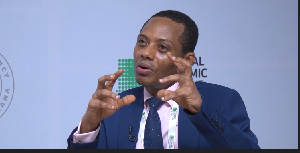 Senior Research Fellow, Leslie Dwight Mensah