The Minister of Labour, Employment and Jobs, Dr Abdul-Rashid Hassan Pelpuo, has revealed that nearly 60 percent of the 300,000 young graduates entering Ghana’s labour market each year remain unemployed, underemployed or lack the relevant skills required for available jobs.
Speaking at the Design & Technology Institute’s (DTI) ‘Jobs & Opportunities Fair’ 2025 edition held at the University of Ghana, Dr Pelpuo highlighted an urgent need to align tertiary education with market demands and expand youth-centred employment programmes.
“We stand at a critical crossroads in Ghana’s development journey. Each year about 300,000 young Ghanaians enter the labour force, brimming with potential. Yet nearly 60 percent face underemployment or are confined to the informal sector, as reported by the Ghana Statistical Service,” he said.
Describing the situation as “dreams deferred and national potential untapped”, the minister noted that youth aged 15–35 account for over 70 percent of the country’s unemployed population. He cited limited job creation and a widening skills mismatch as key contributors.
To address the issue, he stated that the President Mahama administration has committed to creating two million dignified jobs by 2028.
Precision quality framework: bridging the skills gap
Dr Pelpuo underscored the need for technical training, entrepreneurship and stronger academia-industry collaboration to address structural unemployment. He spotlighted the Precision Quality (PQ) framework as a transformative model for skills development.
Developed by the Design and Technology Institute in collaboration with the Mastercard Foundation, PQ is an international standards-based curriculum aimed at strengthening Technical and Vocational Education and Training (TVET) in Ghana. It seeks to close the skills gap by equipping learners with practical, job-ready competencies.
“Too often, academic training fails to meet the demands of today’s workplace. DTI’s PQ Framework directly addresses this shortfall, earning significant recognition and policy attention,” Dr Pelpuo noted.
He further called for scaling-up DTI’s Workplace Experience Learning (WEL) programme into a full-fledged national initiative, with incentives for industry participation.
“In an era driven by artificial intelligence and rapid technological shifts, building future-proof careers will depend on blending technical mastery with creativity, adaptability and critical thinking – skills institutions like DTI actively nurture,” he added.
As youth unemployment continues to weigh on economic and social stability, stakeholders are being urged to adopt evidence-based, scalable solutions to ensure Ghana’s young workforce is not only employable but also competitive in a fast-changing global economy.
Business News of Friday, 25 July 2025
Source: thebftonline.com
Nearly 60% of annual 300,000 graduates' potential remains untapped – Labour Minister
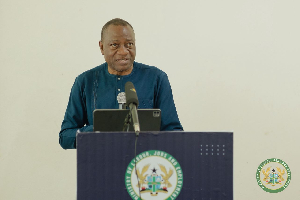 Dr Abdul-Rashid Hassan Pelpuo is the Minister of Labour