President John Dramani Mahama shared an emotional story about family members and friends he has lost to chronic illnesses at the launch of his flagship initiative, the Ghana Medical Trust Fund, also known as the 'Mahama Cares' initiative.
The president said that the fund was important because it is going to help people with chronic diseases like breast cancer, kidney failure, among others, get the much-needed health care.
He recalled how he lost close relations, including his father, mother, friends and staff to chronic diseases, which he indicated was a motivation for his decision to establish the Mahama Cares initiative.
“I have a personal connection to non-communicable diseases, and that is because my father died in 2001, and he died of prostate cancer. My mother died in 2016, and she died of complications of high blood pressure and diabetes. My stepmother died of breast cancer. I lost a friend and somebody who worked for me last year. We celebrated one year since she passed. I'm sure most of you know Mawena Dumor; she died of breast cancer.
“And currently I have a staff in my office whose son is in his 30s and is on dialysis, suffering kidney failure. And so these are not things that are far away from us. These are things that are close to us. These are loved ones that we are talking about,” he said.
The president went on to narrate how he lost a close confidant who played a key role in his political career to kidney failure.
He said that this man had to travel from his hometown to the Komfo Anokye Teaching Hospital just to get dialysis treatment.
“But there's the even sadder story of one of my confidants and strong supporters when I started this whole political journey. He was an assemblyman and he was an executive of our party in Bole Bamboi, where I started my political career as a Member of Parliament, very close to me. He went everywhere with me. Anytime I went back to the constituency, he was in charge of the southern zone. And so anywhere I went, he went with me.
“A few years back, you know, he started to have a problem with his kidneys. At that time, there was no dialysis north of Kumasi. And so if you had kidney failure anywhere above Kumasi, you had to travel to Kumasi to do dialysis. And so he used to travel from Bole Bamboi, like once every week, to do dialysis, go back, and the cost was unbearable. I tried to help as much as I could,” Mahama narrated.
He said that the man eventually had to move to Kumasi because he needed more dialysis treatment.
He said that the man sold all his properties just so that he would be able to afford the treatment, and eventually died in poverty.
“Eventually, he needed more dialysis treatment, and so he couldn't be going and coming. So he had to move his whole family to stay in Kumasi, rent accommodation in Kumasi so that he could be close to Komfo Anokye, where he was undertaking the dialysis, sold his motorbike, sold his TV. And much as I also tried to support, the cost was becoming unbearable.
“Eventually, he died. And he died, leaving poverty behind, because he sold all his assets to be able to look after himself. And so we had to take care to support some of the children, to be able to finish school and all that. These are real stories. And that is why what we're doing today is important, because it will touch a lot of lives,” the president concluded.
About the Mahama Cares initiative:
The initiative aims to ease the financial burden of medical care for Ghanaians, particularly those suffering from chronic and life-threatening conditions such as kidney disease, liver disease, hypertension, and cardiac illnesses.
The fund forms part of President Mahama’s broader health and social protection agenda, as he seeks a return to the presidency in the 2024 elections.
It also underscores his commitment to accessible and affordable healthcare, particularly for vulnerable populations who are often unable to afford prolonged or specialised treatment.
BAI/MA
How on earth will cardiac surgeons fight galamsey? Watch as Jennifer Queen slams Prof Frimpong-Boateng
Meanwhile, watch as frustrated Ghanaians speak out on poor network challenges
General News of Tuesday, 29 April 2025
Source: www.ghanaweb.com
President Mahama shares emotional story of losing a close friend to kidney disease
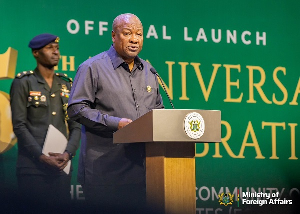 President John Dramani Mahama







Opinions